preferred on

Key Takeaways
- Trezor said the Skladon breach exposed data tied to about 27,000 orders, but no wallet backups were compromised.
- Leaked addresses raise physical safety risks, and some customers reported scam calls. Trezor disclosed no related thefts.
- Affected users should verify unexpected calls or messages through “trezor.io/support” and enter their wallet backup only on their Trezor device.
Trezor said on Nov. 16 that an attacker likely exported data tied to about 27,000 orders from shipping partner Skladon. The records cover orders placed from Aug. 9 through Nov. 7 and include names, phone numbers, delivery addresses, emails, product names, and prices.
Trezor said its systems weren’t compromised, devices are secure, and no wallet backups were involved, while the investigation is ongoing.
Data breach involving Skladon
On 15 November, Skladon, one of our delivery partners, notified us that an attacker had gained unauthorized access to Trezor order data it holds. We’re still investigating with Skladon, but we want to let you know now.
What we know:
• We believe…— Trezor (@Trezor) November 16, 2026
Shipping records can identify wallet buyers
Hardware wallets keep private keys offline, while shipping partners hold information that identifies buyers. Trezor’s Nov. 13 ordering guidance said protecting personal data matters most when it could link a buyer’s identity to crypto holdings.
Skladon is the third Trezor partner breach disclosed in 2026, after ShipMonk on Aug. 13 and Brevo in September. The ShipMonk breach affected 80,689 customers and exposed records from 2019 to 2021 that ShipMonk had assured Trezor it had deleted. In the Brevo breach, 347,149 newsletter email addresses were exported.
The affected orders span 90 days, matching Trezor’s 90-day retention limit for shipping partners. The dates alone don’t show whether the policy limited the scope of the breach. Trezor is cutting the retention limit to 45 days but acknowledges that essential shipping data still goes to its partners. A shorter window can limit how much data a breach exposes, but home delivery still requires a name and address.
How leaked records can fuel physical attacks
On May 8, CertiK described a shift in early 2026 toward using personal data to identify targets. Names and home addresses can make in-person physical surveillance unnecessary. Chainalysis calls a data breach the likeliest cause of France’s 30 publicly known incidents through mid-2026, pointing to alleged dossier sales by a tax official.
Ledger faced a similar issue in December 2020, when about 272,000 customer records with postal addresses and phone numbers surfaced online. The Ledger and Trezor breaches exposed the same gap in hardware wallet security. Both involved customer records held outside the device.
Chainalysis describes violent crypto attacks as rare in absolute terms. Through late June 2026, only 12 of 46 violent theft attempts, or 26%, resulted in payment. Some Trezor customers reported scam calls, but the company’s update identifies no thefts linked to the Skladon breach.
While most crypto crime unfolds online, physical violence against holders is accelerating. With $30M already stolen in 2026, "wrench attacks" and home invasions are on pace for a record year, with France emerging as the primary global hotspot. Read our new research for a… pic.twitter.com/ilJiOyJtLy
— Chainalysis (@chainalysis) August 6, 2026
What affected customers should do now
Customers who received Trezor’s breach email and ordered from Aug. 9 through Nov. 7 were affected. Some Aug. 9-14 buyers may also be affected, but Trezor cannot email them because it anonymized their records. Trezor says US customers were unaffected because Skladon doesn’t ship there.
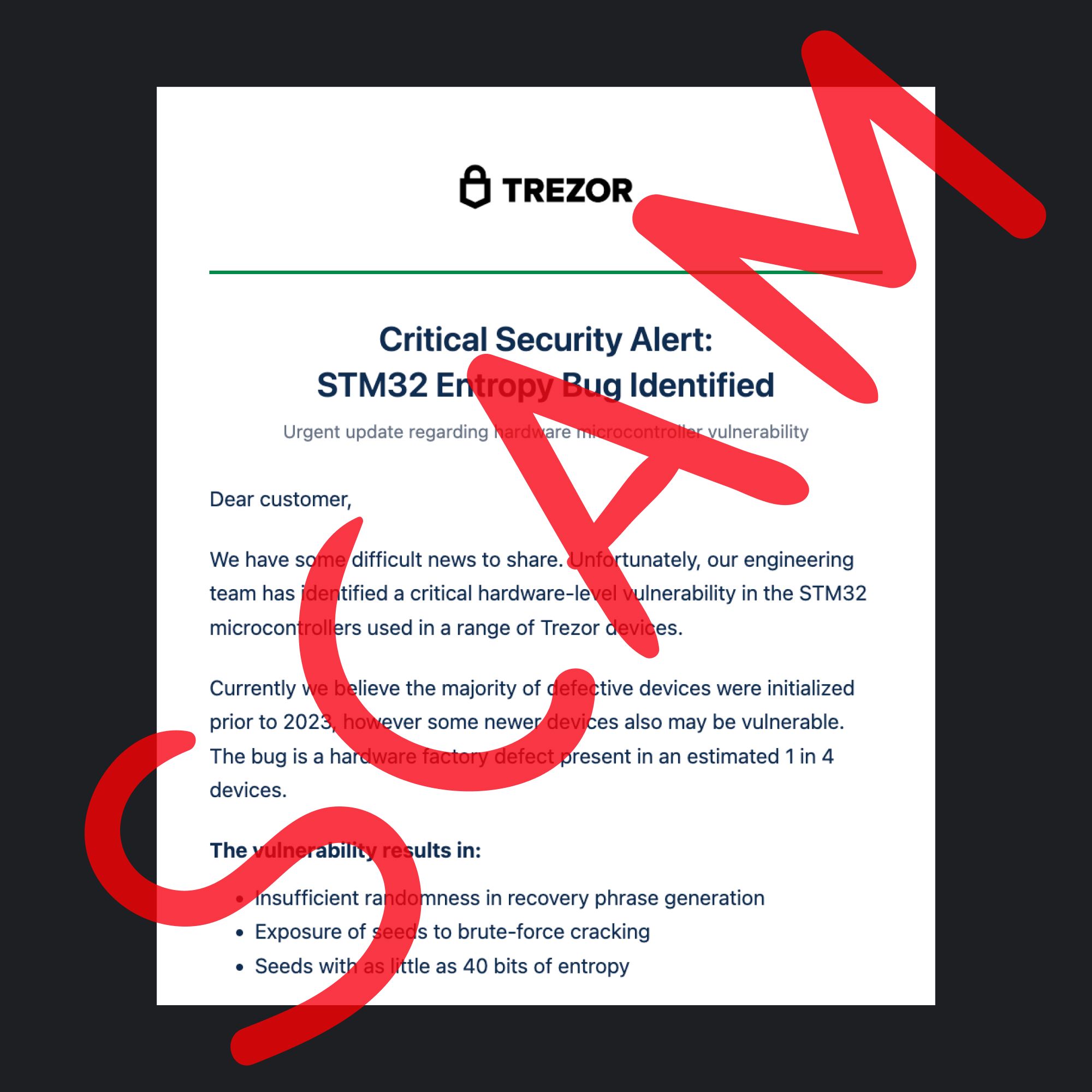
Treat unexpected calls, texts, emails, or letters about an order as suspicious. Contact Trezor through “trezor.io/support,” not through links, QR codes, or phone numbers in a message. Enter your wallet backup only on your Trezor device and limit who knows you hold crypto. If you receive a threat, contact local police first.
Trezor says anonymous pickup covers 18 European countries, but it applies only to direct store orders because resellers and marketplaces arrange their own shipping. Trezor says it deletes anonymous pickup shipping details 45 days after delivery.