preferred on


Points of Focus
- Citrea is shifting its long-term focus toward private Bitcoin payments, with the Crest wallet expected to launch within weeks.
- CEO Kılıç said BTC lending and ctUSD can boost Bitcoin adoption, while Clementine reduces bridge trust assumptions.
- Citrea uses token-based governance with guardrails, aiming for greater decentralization and Bitcoin’s use as money within a decade.
Bitcoin bridges have historically relied on federated multisig setups, according to Citrea. Citrea said those designs “require users to place complete trust in a small committee of key holders.” The network launched its mainnet on Jan. 27 as a zero-knowledge (ZK) rollup that settles on Bitcoin, with a BitVM-based bridge. The launch included ctUSD, a dollar stablecoin issued by MoonPay.
Citrea’s bridge, Clementine, processed 150 Bitcoin (BTC) in total volume during its first six months, it reported on Aug. 4. On Sept. 23, Citrea acquired Crest, a self-custodial private Bitcoin wallet.
Orkun Mahir Kılıç, co-founder and CEO of Chainway Labs — a core contributor to Citrea — spoke to AlphaWire Head of Marketing Jonny Seymour at Token2049 Singapore on Oct. 7. He said the Chainway Labs team is putting almost all its resources into Crest.
Kılıç said Citrea wants Bitcoin to function as money, describing the goal as a digital dollar rather than digital gold. He expects Crest to launch in a few weeks. Crest’s website listed the wallet as “launching soon in private beta,” without a date, as of Oct. 8.
1/8 Today, Citrea Mainnet Goes Live 🍊🍋
We are officially live with the first Bitcoin application layer that enables institutions and individuals to lend, trade, and settle directly on the Bitcoin Network.
Start your journey with Citrea Dashboard: https://t.co/adOsBrrFVb 🧵 pic.twitter.com/DISDyxlzBG
— Citrea | Private BTC for all (@citrea_xyz) January 27, 2026
Kılıç said infrastructure has to arrive before Bitcoin holders change habits
Asked whether Bitcoin holders want lending and credit products at all, Kılıç attributed idle coins to a lack of infrastructure. He does not expect that to change within one year, two years, or even five.
According to Kılıç, payment frequency on Bitcoin rose after Lightning arrived, though the user base did not meaningfully grow. “Today, we don’t see Bitcoin moving, but it’s actually moving on L2s, including Lightning,” he said.
Wrapped BTC brought the first basic decentralized finance (DeFi) use of Bitcoin, in his telling, though without the best security. “It’s fully custodial and centralized, so this risk exists, but I think over time, as we improve things, Bitcoin utilization is going to get higher.”
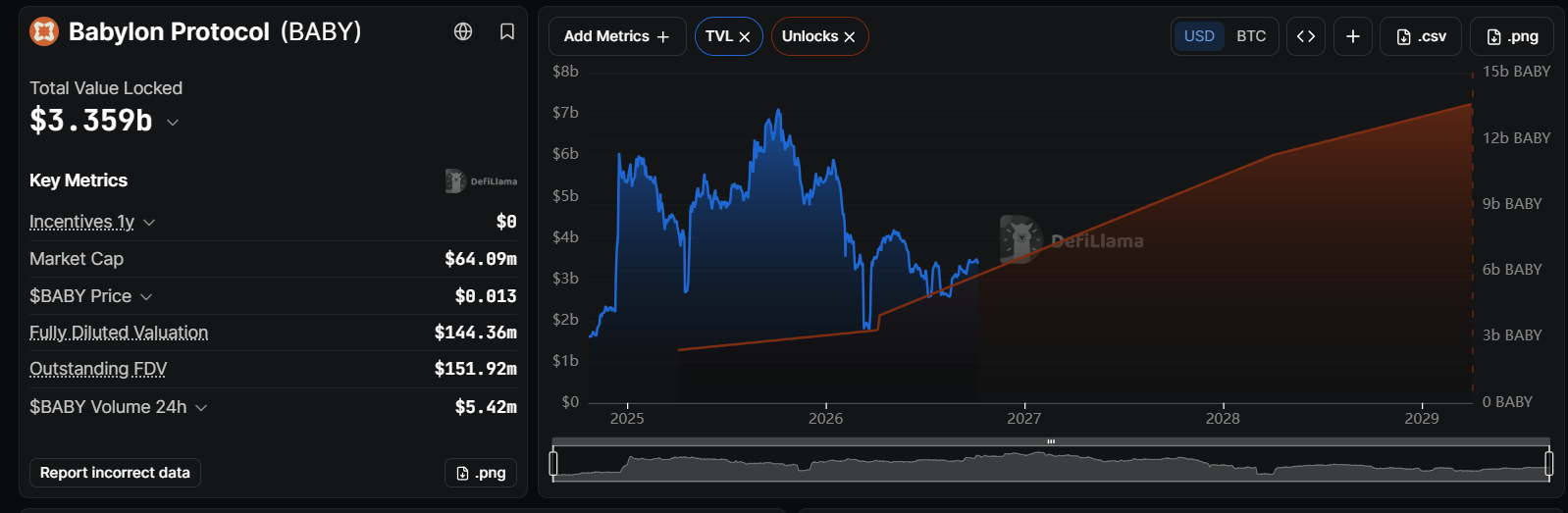
He cited Babylon’s staking product as an example. He said Babylon reached $3 billion in total value locked after more centralized Bitcoin staking attempts failed. In his view, that shows people are open to experimenting.
Citrea’s lending and borrowing market was 90% utilized on Oct. 7, he said, a figure AlphaWire did not independently verify. Users deposit cBTC as collateral and withdraw stablecoins to generate yield, particularly in rising markets, according to Kılıç.
Kılıç compared the build-out to earlier technology cycles. “First there was an infrastructure that people didn’t really believe in. Maybe it wasn’t so useful, but as the network grows, things become easier, similar to Facebook, similar to LinkedIn.”
On why BTC collateral should not stay on Ethereum or Solana, Kılıç pointed first to volatility. “People today don’t use their Solana to borrow cash because its volatility is very high compared to Bitcoin, but people actually use Bitcoin to borrow cash against it because volatility compared to the rest of crypto is much, much lower.”
Moving BTC to those chains adds trust assumptions, he argued. Kılıç added that Bitcoin is such an inflexible chain “that communicating with other chains is extremely hard.”
He likened wrapped BTC to a tokenized asset in which the holder has no claim against the custodian. “On Citrea you programmatically hold the claim for the underlying Bitcoin on L1,” Kılıç said.
The thesis is at an early stage, he acknowledged. Citrea believes Bitcoin is the best store of value. “The logical conclusion is that it should use its own network rather than wrap it out somewhere else.”
Citrea issued ctUSD to keep stablecoin yield inside its ecosystem
On whether reliance on dollar stablecoins undercuts a Bitcoin financial system, Kılıç said Bitcoin and stablecoins compete to become money. Stablecoins hold the advantage of convenience because “we don’t need to change how we live our lives.”
“In theory, I like Bitcoin to become money in the long term, but in practice we should start getting users first to convert and come on Bitcoin,” he said.
Kılıç called stablecoins the best on-ramp and off-ramp tools in crypto. “People own Bitcoin, but they still need to pay their electricity bills or their rent.”
Cashing out through a centralized exchange requires Know Your Customer (KYC) and bank details, he said. According to Kılıç, decentralized exchanges convert Bitcoin to stablecoins without KYC or data leaks. “You can convert your Bitcoin to stablecoin and then go to some off-ramp and just cash out to dollars, and you don’t even need to see the dollars. It can go straight into your landlord’s account.”
New users also arrive holding dollars rather than Bitcoin, which makes stablecoins their entry point, Kılıç added.
Kılıç said Citrea issued ctUSD with MoonPay to ease on-ramp and off-ramp access and to own the economics. “The underlying yield is benefiting the ecosystem rather than some third party like Circle or Tether.”
🟣 @moonpay on-ramps for ctUSD are live!
ctUSD is officially live for direct on-ramps and off-ramps in the US (excluding New York, Colorado and the U.S. Virgin Islands) & across 120+ countries worldwide.
Bitcoin capital markets at scale!
Start now: https://t.co/tqEY72EQ3V 🧵 pic.twitter.com/Vpbbj37wxX— Citrea | Private BTC for all (@citrea_xyz) August 19, 2026
Citrea says its bridge needs only an honest minority
Citrea has two components, Kılıç said. The first is a ZK-rollup that uses Bitcoin for data availability. If the operator vanishes, users can still retrieve their data to keep using the network or exit, he said.
The second is the bridge that moves BTC in and out. According to Kılıç, most earlier Bitcoin projects used multisig bridges, such as two of three signers securing the funds. That creates what he called honest majority risk, where funds are exposed if more than half the signers turn dishonest. He said the risk persists on every Bitcoin sidechain except Citrea and Lightning.
That said, Bitlayer announced on July 18, 2025, that its BitVM Bridge beta had launched on mainnet as a trust-minimized bridge.
“With Citrea, we reduced this assumption to an honest minority, which means that as long as one of the participants is honest, even though the rest of the 99% are dishonest, they cannot steal the money,” Kılıç said. “So, there is still a trust assumption for that one honest person, but compared to what exists today in other technologies, it is a way better trust assumption than trusting 50% of a committee.”
Citrea’s Aug. 4 review specifies the roles: Incorrect peg-outs cannot succeed, while one signer and one watchtower stay honest.
Kılıç attributed the remaining assumption to Bitcoin’s limits. Bitcoin lacks the technology for systems that are both fully trustless and programmable, he said. Lightning stays trustless by limiting itself to payments, he noted.
“With Citrea you can have the full programmability, but it comes with the caveat that it’s not fully trustless, but it still has trust minimization,” he said.
A future Bitcoin soft fork or hard fork would allow a fully trustless design, in Kılıç’s view. That change is “independent of Citrea and more dependent on the Bitcoin consensus,” he said.
Citrea’s trust-minimized bridge, Clementine, fundamentally shifts the security model of legacy Bitcoin bridges.
In Clementine's design, as long as a single Signer and a single Watchtower remains honest, incorrect peg-outs cannot succeed.
Tune in 🎧 pic.twitter.com/8z7vTm77v0
— Citrea | Private BTC for all (@citrea_xyz) September 7, 2026
Citrea pairs token voting with guardrails while it decentralizes
Citrea said on May 4 that staked CTR yields xCTR, a non-transferable token with voting power over its governance treasury.
Kılıç called governance “definitely not a solved concept today.” Bitcoin and Ethereum depend on social consensus, he said, which is hard to define because “it doesn’t have any criteria.”
Those networks can rely on it, in his view, because decades of decentralization back them. Citrea is still bootstrapping and “definitely not as decentralized as Bitcoin,” he added.
As a layer 2 (L2), Citrea faces a further constraint. In Kılıç’s explanation, code on Bitcoin L1 governs the network, and upgrading it requires programmable voting. “People cannot just say something to the code; they need to click something and vote,” Kılıç said.
Kılıç said Citrea worked with Aragon on a model called optimistic governance. In his description, core contributors act as proposers, and tokenholders vote on proposals rather than creating them. He described the model as providing some guardrails within “an evolving concept.” Citrea’s Sept. 4 blog post says xCTR holders need not “actively cast a vote” if they agree with a proposal.
Kılıç sees token voting as the usual starting point. “Most of the ecosystems we see start with the basic holder voting, and then they move to different things, and maybe in the end they completely remove the tokenholder voting and purely depend on social consensus,” he said. “So, we’re starting with it because we’re still small and growing in our decentralization journey.”
He expects governance to become “fair and socially acceptable” as Citrea decentralizes.
Voting Process for Citrea Governance:
Due to its Optimistic Governance framework, xCTR holders do not need to vote if they agree with the proposal.
Voting options:
– Yes to Veto = No (disagree)
– No to Veto = Yes (agree)
– Abstain = Choosing not to vote https://t.co/wkW18NHuWt— Citrea | Private BTC for all (@citrea_xyz) June 18, 2026
Privacy comes first in Citrea’s plan to make Bitcoin money
“Making Bitcoin money is more important than keeping it as a pristine asset that you don’t touch,” Kılıç said.
Kılıç described Crest as a mobile-first wallet for shielding BTC and making cross-chain payments into USDC (USDC) or Tether’s USDt (USDT). Users will be able to return to Bitcoin L1 or send shielded payments within the pool, he said.
“If I need to pay you for this coffee in Bitcoin, you will see all my portfolio, and I don’t want that. So, privacy is actually the very first thing needed to make Bitcoin successful as money,” he said.
The team is allocating “almost 100% of our resources” to Crest, Kılıç said. He added that users who do not yet spend Bitcoin can eventually borrow cash against BTC privately through it.
In the near term, Kılıç said, people still need dollars, which is why ctUSD and the lending market remain. “But our primary focus in the long run is to make Bitcoin private and usable so it serves as money much better than USDT, USDC, and other centralized stablecoins,” he added.
Kılıç called Crest the first step toward making Bitcoin money. He wants to see that outcome in “the next 10 years.”
The demand for privacy is proven.@crest_btc is launching soon with private BTC transfers and cross-chain private payments.
Join the waitlist:https://t.co/dobHWUepIR
— Citrea | Private BTC for all (@citrea_xyz) October 2, 2026