preferred on


Points of Focus
- Kotecha said technology, not regulators, is the likelier fix for stablecoin fragmentation.
- The Treasury’s foreign issuer proposal requires comparable regimes, with comments due Oct. 19.
- Transit moved nearly $30 million on Robinhood Chain in two weeks, Paxos Labs said.
The US Treasury proposed rules on Aug. 18 under which a foreign stablecoin issuer can serve US customers only if the Treasury finds its home regime comparable to the GENIUS Act’s, with comments due Oct. 19.
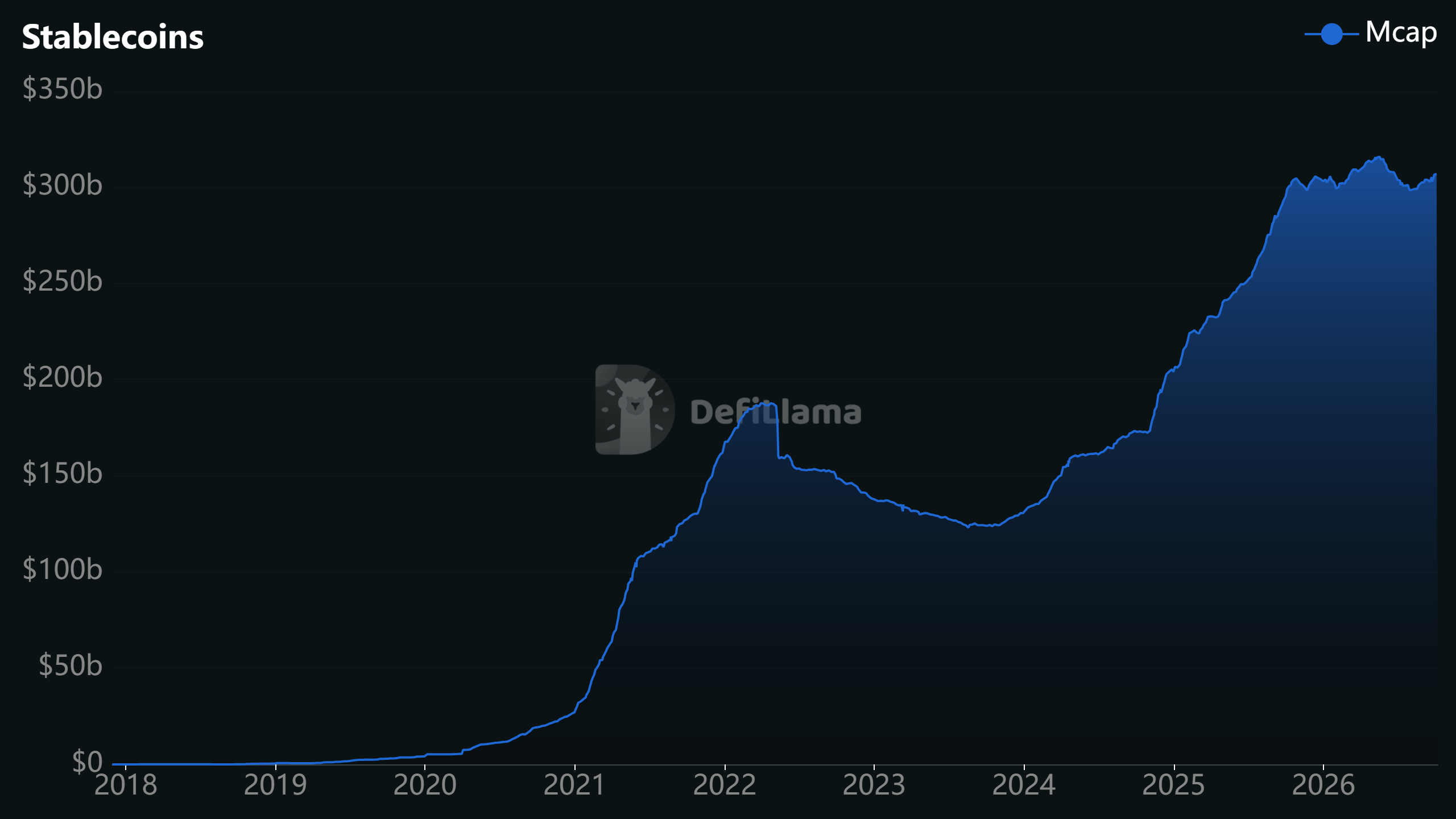
The market those rules govern is $307.8 billion, DefiLlama shows, with Tether’s USDt (USDT) holding 59.84%.
Bhau Kotecha, co-founder of Paxos Labs, which was spun out of Paxos in 2025, expects regulation to move more slowly than the problem it creates. Speaking to AlphaWire’s Dr. Guneet Kaur at Token2049 Singapore, Kotecha said stablecoin fragmentation across products and regulators is more likely to be solved by technology than by regulatory collaboration.
Stablecoin fragmentation and a handful of global stablecoins
“I definitely think we’re headed toward a world where we’ll have many stablecoins, but maybe not hundreds,” Kotecha said. He expects a long tail tied to specific ecosystems and a few that travel everywhere. “I think there will probably be a handful of globally accepted stablecoins.”
The handful already dominates by DefiLlama’s count, and Kotecha argued the harder problem is moving between them. Tokenized assets, whether dollar stablecoins, other currencies or gold, are only useful if holders can trade between them easily, he said.
Stablecoin regulation across GENIUS, MiCA, and MAS regimes
Regulators are discussing reciprocal arrangements, Kotecha said, but cross-regulator collaboration is hard. “The more likely way I see this being solved is through technology,” he said. His example was a Malaysian business paid in stablecoins from abroad, which would immediately convert them into one its local regulator accepts.
Privacy sits on the same fault line, and Kotecha rejected both fully private and fully transparent designs, favoring one that follows Know Your Customer and Anti-Money Laundering rules while shielding amounts onchain, with the ability to uncover them if a regulator asks.
Paxos Labs launched the USAD stablecoin on Aleo on Feb. 11, built on Paxos’ issuance infrastructure to meet oversight requirements. Kotecha said Paxos Labs looks for a specific authority request, and “oftentimes, we will comply,” depending on the scenario.
The Treasury’s process shows why he sees it that way. The proposal makes comparability a Treasury determination, and a compliance-industry summary says no jurisdiction has yet been found comparable, with decisions likely well into 2027.
Paxos Labs Transit stablecoin conversion on Robinhood Chain
Transit is Paxos Labs’ answer. It went live on Robinhood Chain on July 1 and moved nearly $30 million in two weeks, Paxos Labs said. Across integrated it on Aug. 10 to bridge up to $50 million to Robinhood Chain in one transfer at a locked rate.
Kotecha said users want to move between ecosystems that each favor a different stablecoin. Two of the three stablecoins Transit supports, USDG and PayPalUSD (PYUSD), are issued by Paxos entities, Paxos documentation lists, which limits how neutral the layer is.
PAXGy tokenized gold leasing and Paxos Labs liquidity plans
Kotecha pitched PAXGy as opening an institutional market to ordinary holders. “If you or I showed up with $100 of gold, they wouldn’t even look at us,” he said of gold leasing.
Paxos Labs launched PAXGy on Sept. 24, but its release gives no yield rate or borrower names and warns the exchange rate may be adjusted downward after losses or defaults. CoinGecko puts tokenized gold at $5.87 billion.
His goal for the next few years is a deep liquidity network between tokenized assets. “You can issue the token, but if it’s not liquid and accessible on chain, there’s not an ability for it to have utility,” Kotecha said.
Treasury’s comment window on foreign issuers closes on Oct. 19.