A USDC (USDC) token can move from a wallet in Paris to one in New York without changing its identity. Onchain, it remains the same dollar-denominated asset, designed to trade and redeem at $1.
Behind that seamless transfer, however, the regulatory structure looks very different.
In Europe, USDC is issued through Circle France under the European Union’s Markets in Crypto-Assets (MiCA) regulation, with its own reserve and redemption obligations. Outside the European Economic Area (EEA), Circle sits behind the token.
In the US, Circle is also preparing for the GENIUS Act. It is currently in an implementation phase, with the full licensing and operational requirements expected to take effect on Jan. 18, 2027.
So far, Circle has managed to keep the regulatory differences largely invisible to the market. USDC remains fungible even as the legal entities, reserve structures, and redemption frameworks supporting it become increasingly tied to geography.
Now this is a problem stablecoins were originally created to solve. The money may move without borders, but the rules governing the money do not.
The question is whether issuers can keep that divide beneath the infrastructure or if regulatory fragmentation eventually turns into market fragmentation, splitting liquidity, and making a supposedly global digital dollar behave differently depending on where it is used.
Luxembourg has established itself as the EU’s leading hub for institutional crypto and tokenization. The country has long taken a thoughtful, innovation-oriented approach to blockchain technology and to digital assets.
That is why we are delighted to have chosen Luxembourg as… pic.twitter.com/qr8gB5n2L5
— Faryar Shirzad 🛡️ (@faryarshirzad) June 24, 2026
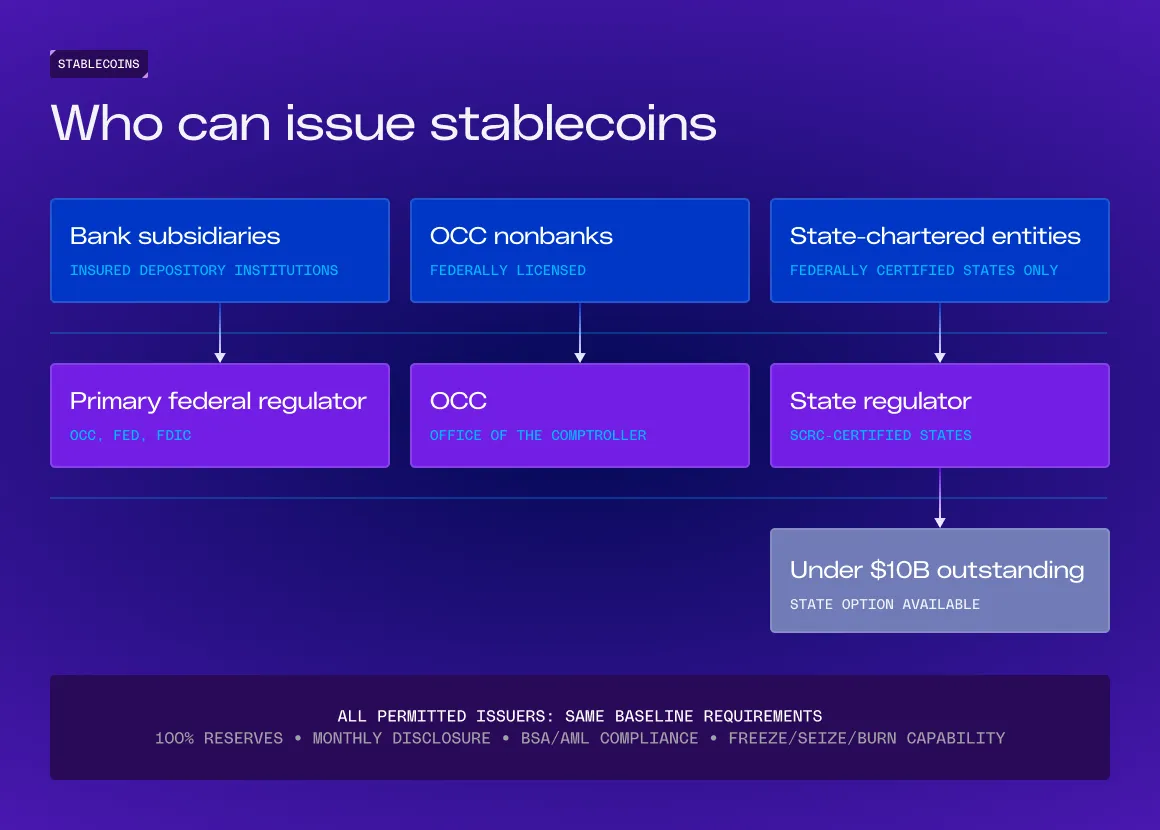
Europe acted first. MiCA’s stablecoin rules took effect in June 2023, establishing specific requirements for asset-referenced tokens (ARTs) and e-money tokens. Circle’s French subsidiary obtained an Electronic Money Institution (EMI) license and began issuing USDC and EURC across the EEA.
For every USDC holder based in the EEA, whether in Germany, Spain, Italy, the Netherlands, or elsewhere in the bloc, the responsible issuer is Circle Internet Financial Europe SAS, known as Circle France. The French entity operates as an EMI regulated by the Autorité de contrôle prudentiel et de résolution (ACPR) and holds MiCA authorization that permits it to issue the stablecoin across the entire EEA.
The US followed with the GENIUS Act, signed into law in July 2025. The statute created the first comprehensive federal framework for payment stablecoins. Stablecoin issuers must maintain reserves backing outstanding stablecoins at least 1:1 in eligible liquid assets. They must comply with requirements covering redemption, disclosures, Anti-Money Laundering (AML) controls, and regulatory supervision.
The law is not yet fully in effect. Circle noted in its 2025 annual filing that the GENIUS Act would take effect no earlier than Jan. 18, 2027, or 120 days after federal regulators issue final implementing regulations. Circle said its existing practices already align with many of the law’s core requirements but described its position as a path toward full regulatory alignment rather than completed compliance.
Both frameworks share broad goals — high-quality reserves, supervision, and par redemption — but their structures diverge. MiCA slots USDC into Europe’s e-money regime, while the GENIUS Act builds a distinct US payment-stablecoin category. Circle, therefore, manages one blockchain asset under two different legal and supervisory systems.
In the EEA, Circle France holds reserves matching USDC. The company’s MiCA documentation states that tokens issued by the two entities remain fully fungible.
This mechanism conjures up a practical problem. USDC can move from a French wallet to one outside the EEA in seconds without changing its onchain identity. The reserve obligations, however, stay tied to specific regulated entities. Circle runs a reserve-rebalancing process between the two issuers as holdings shift between the EEA and the rest of the world.
Its MiCA disclosures label this a “dual-issuer risk.” If balances and redemptions tilt heavily toward Europe, Circle may have to transfer reserves to Circle France so the European entity continues to meet its obligations. As the token travels globally, the balance sheet beneath it is becoming regional.
Whether in the US or the EEA jurisdiction, 1 USDC still equals 1 USDC onchain. Decentralized exchanges do not typically inquire whether a token arrived from Germany, Singapore, or the US. Lending protocols identify USDC by its smart contract address, not by the regulatory track record of each unit.
Fungibility performs in the background, and any alternative would be costly. If regulation compelled issuers to issue jurisdiction-specific versions, exchanges, automated market makers (AMMs), and lending protocols might require separate markets, liquidity pools, and collateral treatments, respectively. Liquidity concentrated in a single asset will fragment, raising slippage and opening arbitrage between instruments that claim to represent the same dollar.
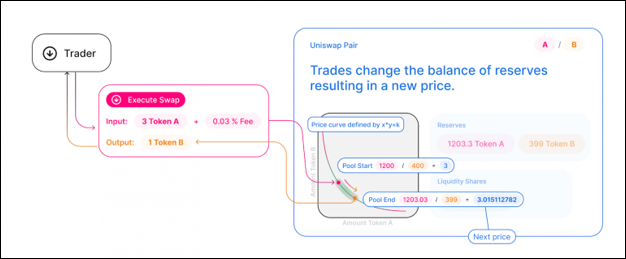
Circle has prevented such an outcome by keeping regulatory differences below the token layer while preserving economic interchangeability. Whether this segregation can endure as more jurisdictions adopt their own rules remains an open question.
GENIUS requires permitted issuers to maintain at least 1:1 reserves in eligible assets, including cash, demand deposits, short-term Treasurys, and certain repurchase agreements and money-market funds.
MiCA, on the other hand, takes a different approach for e-money tokens such as USDC. At least 30% of funds received must be held by the issuer in separate accounts at credit institutions, while the remainder must be invested in secure, low-risk, and highly liquid instruments denominated in the currency referenced by the token. Holders must also have the right to redeem their tokens at any time and at par value.
Consequently, Circle cannot treat USDC’s backing as a single undifferentiated pool. Circle France’s minimum reserves must correspond to EEA holdings, while Circle LLC’s reserves correspond to holdings elsewhere. As tokens move continuously between these jurisdictions, reserve allocations must adjust accordingly.
The difference becomes sharper when holders seek to cash out. Circle’s MiCA white paper states that EEA holders have a right to redeem at par with Circle France. Holders outside the EEA look to the terms that govern tokens issued by Circle LLC.
However, in regular market conditions, the distinction rarely surfaces. Most USDC changes hands on exchanges, decentralized platforms, and payment rails without direct redemption. The credibility of stablecoins depends on the ability to convert tokens into fiat at par. That means full reserve backing is only part of the equation. Holders must also consider which Circle entity is responsible for redemption and which regulatory framework governs that obligation.
The immediate risk is not that European and American USDC trade at different prices, as they do not. The longer-term risk is that the regulatory architecture needed to keep them interchangeable is growing more elaborate with each passing day. Each new jurisdiction may add another licensed issuer, reserve regime, redemption framework, banking relationship, or compliance layer, making the system more complex.
As long as those differences stay beneath the token layer, users experience USDC as borderless money. If they eventually surface at the token layer, liquidity could fracture. It may lead to exchanges and decentralized finance (DeFi) protocols confronting multiple versions of the same dollar asset, and cross-border transfers could require extra routing and compliance steps.
The fragmentation problem is less about USDC’s current structure; it is whether the regulatory structure required to keep the token global eventually becomes too complex to handle.
Early stablecoin infrastructure rested on technical standards – token contracts, blockchains, bridges, exchanges, and liquidity pools. Regulation is now becoming another infrastructure layer. Stablecoins are growing more interoperable across networks even as their regulated back-ends grow more jurisdiction-specific. For global issuers, solving the technical problem without forcing users to confront the legal one may become a decisive competitive edge.
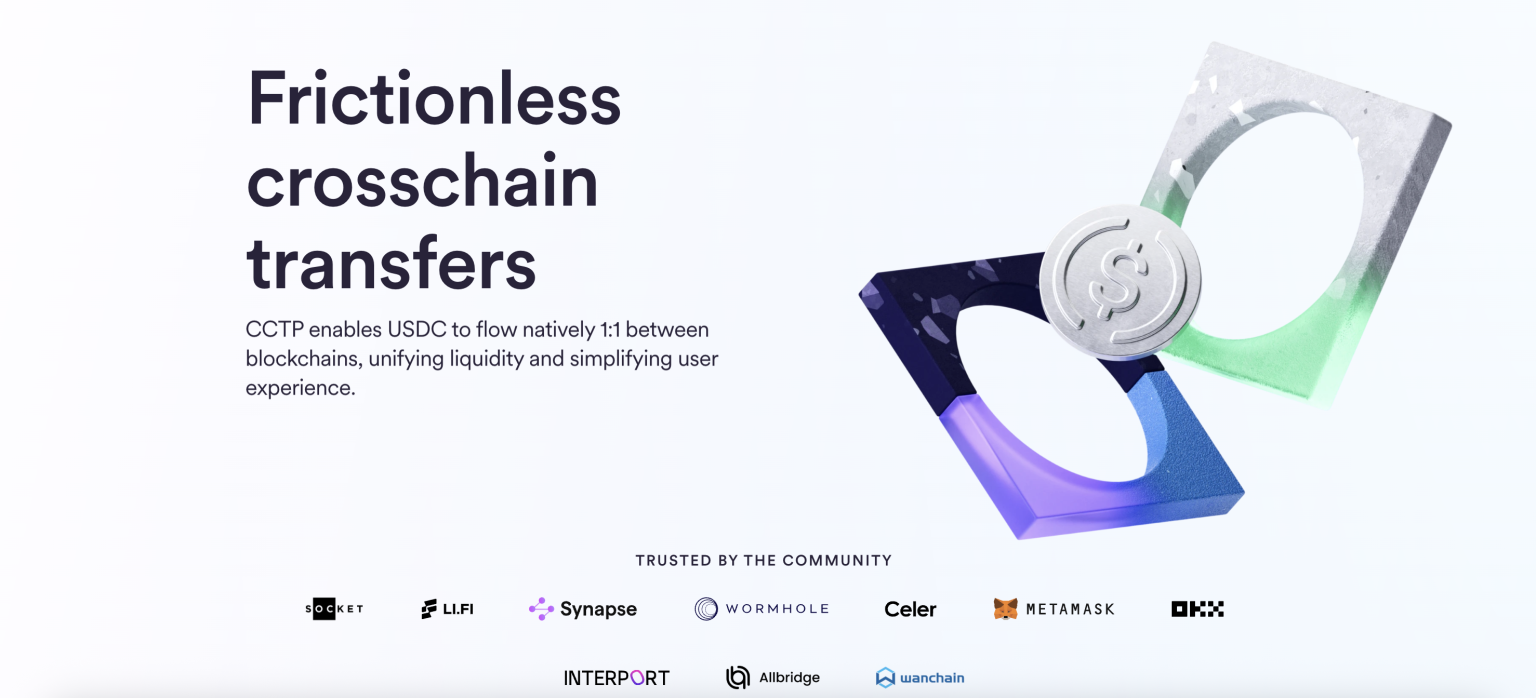
DeFi protocols identify a stablecoin by contract address, applying collateral and liquidation parameters accordingly. It does not typically determine which Circle entity stands behind a particular unit.
Regulatory differences between both geographical regions leave the token’s economic behavior unchanged. Stress conditions offer a sterner test. If redemption terms, reserve rules, or regulatory interventions diverge across jurisdictions, an asset treated as fungible at the smart-contract layer carries different legal characteristics underneath.
Then, the question arises whether legally distinct claims can be regarded as a single financial asset. If the answer turns negative, regulatory infrastructure could begin to shape application design. It would lead to wallets functioning as compliance interfaces, payment apps routing by jurisdiction, exchanges imposing differentiated access rules, and lending protocols incorporating regulatory attributes into risk models.
With USDC’s $73 billion embedded across centralized and decentralized exchanges, lending markets, payments, and tokenized-asset platforms, even modest regulatory differences across the world can produce large operational effects.
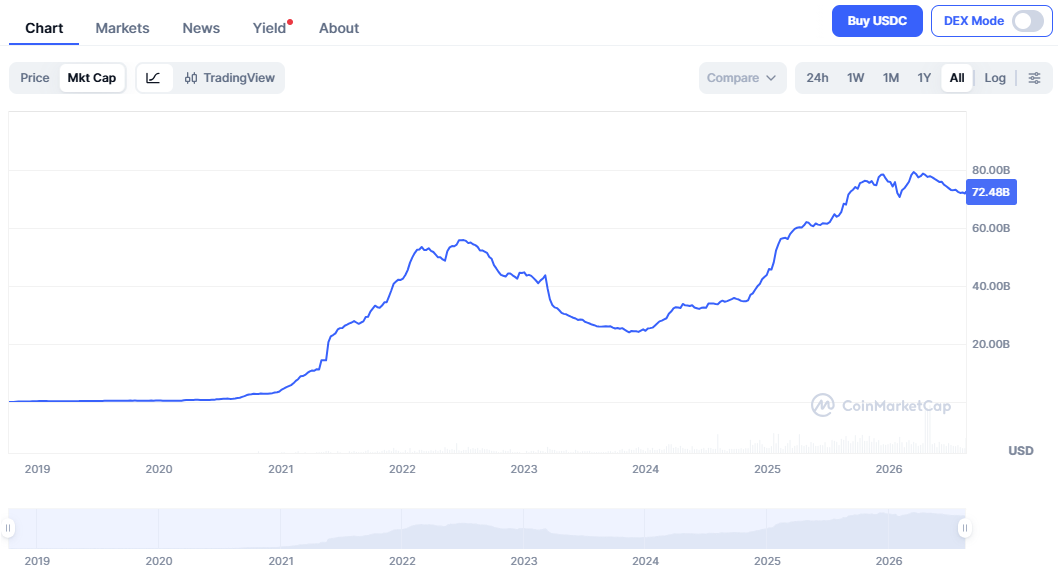
Maintaining regulated entities across major jurisdictions requires licenses, compliance staff, audits, banking relationships, reserve-management systems and capital. Many of these fall under fixed costs. An issuer handling assets worth tens of billions of dollars can amortize those costs more easily than a smaller competitor.
Regulatory fragmentation could produce an unintended consequence. Instead of fostering a diverse stablecoin landscape, it may reinforce the position of companies able to operate multiple regulated infrastructures under one globally liquid token.
A critical variable is how regulators treat foreign stablecoin regimes. The GENIUS Act sets conditions under which foreign-issued payment stablecoins may operate in the US. It opens the possibility of regulatory interoperability.
The US and the European Union need not enact matching statutes to preserve global fungibility. They need sufficient mutual recognition that issuers can satisfy both frameworks without producing incompatible products. If that recognition materializes, Circle’s dual-issuer model could serve as a template.
Tokens remain interchangeable onchain while licensed entities, reserve pools, and compliance systems operate locally. If recognition fails, pressure to surface jurisdictional boundaries at the token level will rise, and legal fragmentation risks turning into liquidity fragmentation.
Over the next several years, regulated stablecoins could follow one of three broad paths.
Circle’s current dual-issuer structure already approximates the third model. Financial regulations across the globe rarely converge seamlessly, and the practical objective before the stablecoin issuers is making differences interoperable.
Stablecoins were conceived to make money behave more like the internet — global, programmable, and largely indifferent to geography. Regulation is reintroducing geography into the system.
GENIUS and MiCA have not yet broken USDC into regional tokens. They are, however, pushing Circle toward a more intricate architecture in which reserve obligations and redemption rights increasingly track jurisdictional lines, while the token itself remains globally fungible.
The distinction is consequential. The first generation of stablecoin infrastructure solved the problem of moving assets across blockchains. The next generation must solve a harder institutional problem: keeping the funds interchangeable when the laws that govern them are not. Circle’s dual-issuer experiment is an early test of whether that is possible.


 preferred on