preferred on


Points of Focus
- First Digital plans to expand beyond FDUSD into multi-stablecoin infrastructure amid its proposed $250 million Nasdaq deal.
- CEO Vincent Chok emphasized regulated access, reserve transparency, and strict spending limits for AI-agent payments.
- Chok expects dollar stablecoins to remain dominant as local-currency tokens gain traction in cross-border settlements.
Stablecoins emerged as an on- and off-ramp to crypto and later gained use for cross-border payments in emerging markets. Their growing use is putting greater emphasis on regulated infrastructure, interoperability, and the safeguards supporting digital payments.
Issuers are now exploring a newer use case in payments made by AI agents. Meanwhile, dollar-backed tokens remain dominant, amid emerging demand for local-currency alternatives.
On Oct. 6, First Digital agreed to list on Nasdaq through a merger with special-purpose acquisition company Koyn. The deal values First Digital at $250 million pre-money, subject to adjustment. Closing is expected in the first half of 2027, pending shareholder and Nasdaq approvals and an effective Securities and Exchange Commission (SEC) registration statement.
Speaking with AlphaWire’s Dr. Guneet Kaur at Token2049 Singapore, Vincent Chok said First Digital will become a stablecoin infrastructure company. Chok founded First Digital, the company behind the FDUSD stablecoin, and serves as its CEO. He said First Digital is building a platform that supports other stablecoins alongside FDUSD.
An important milestone for First Digital.
We've signed a definitive business combination agreement with CSLM Digital Asset Acquisition Corp III (Nasdaq: KOYN).
The proposed transaction values First Digital at $250 million on a pre-money equity basis, and the post-combined… pic.twitter.com/KSikwfVlgf
— First Digital (@FirstDigitalHQ) October 7, 2026
Nasdaq plan points First Digital toward a platform open to other stablecoins
Chok framed the listing as a growth step, saying capital markets will help propel the company’s next phase. The aim, he said, is to grow FDUSD and the ecosystem around stablecoins.
Chok said the platform is agnostic to other stablecoins and targets FX, trades, swaps, settlement, and agentic payments, adding, “We can now look at not only focusing on FDUSD but other stablecoins.”
He described the shift this way: “We will not be a stablecoin company; we’ll be a stablecoin infrastructure company,” and said that the company can work with platforms and other partners to create and grow the whole stablecoin ecosystem.
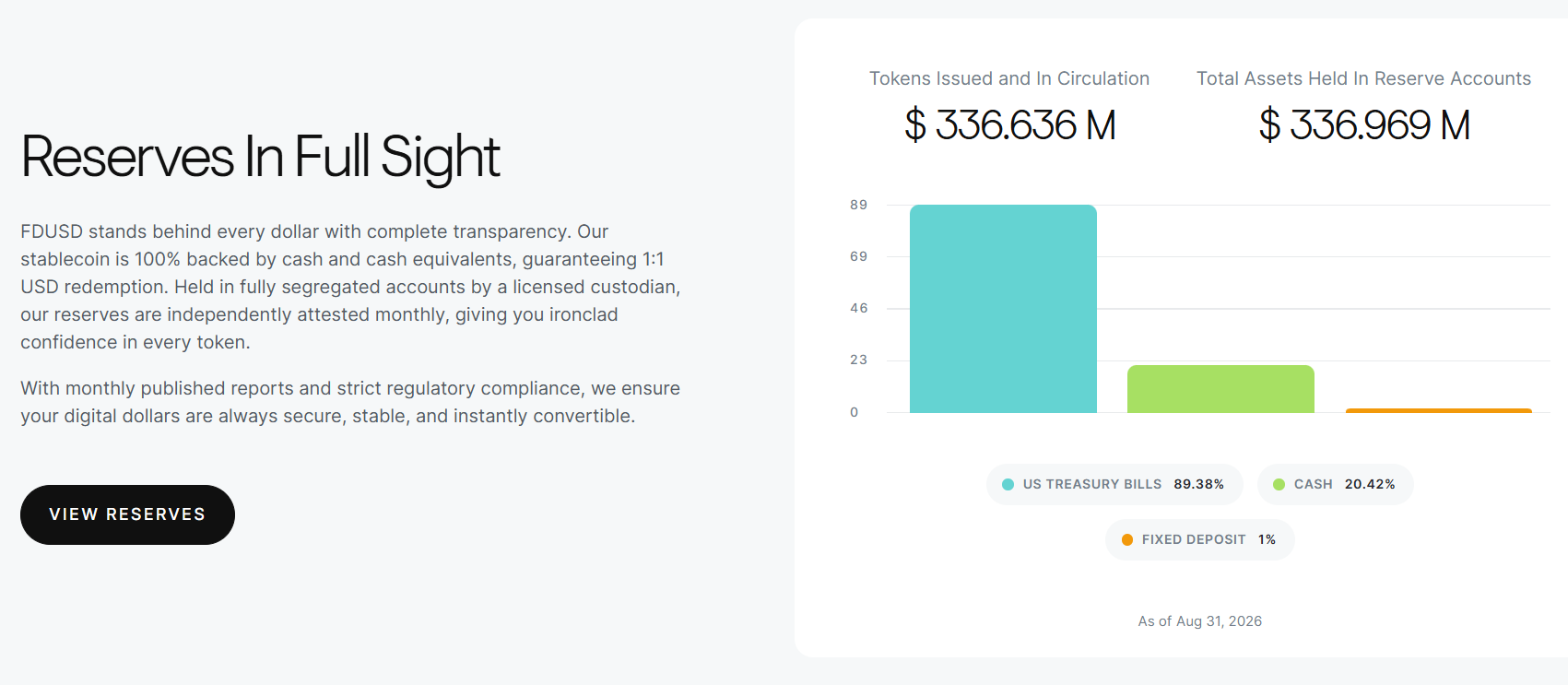
First Digital’s transparency page showed $336.6 million of FDUSD in circulation on Aug. 31. Circulation peaked above $4.4 billion in April 2024, according to First Digital.
Chok ties stablecoin success to regulated access and reserve transparency
Chok called access to regulated infrastructure “very important” in deciding which stablecoins succeed. He said the HashKey Exchange listing in Hong Kong shows FDUSD met the venue’s listing and compliance criteria.
He highlighted that platforms building products such as agentic payments and settlements on a stablecoin scrutinize the issuer. “They really look at infrastructure, internal controls, and transparency,” he said.
On yield, Chok said a stablecoin cannot produce it because returns come from “secondary markets and people building around vaults.”
“We need to safeguard the underlying reserve, the assets. We have to make sure that we’re transparent and attestation reports are out on time,” he added.
He said First Digital must understand its role and not “over-cross into certain unregulated zones” because consumers need protection.
Compliance works better when it's built into the rails instead of checked afterwards.
At Institutional Privacy Day, @vchok joined @NewtonLabs and @zama to talk about how programmable rails and an authorization layer can make that work for regulated capital, with FDUSD reserves… https://t.co/wDG3n7qSTd
— First Digital (@FirstDigitalHQ) October 5, 2026
Chok sees agent payments as early and advises limiting wallet balances
Chok described stablecoins as “the only currency that can be used to settle with the agents at the moment.” He said the field remains in “very early days.”
He pointed to an agent tasked with buying a concert ticket that goes on sale at 2 or 3 am. “It can’t use a Visa card basically because it still needs approval from its owner,” Chok said. With a stablecoin, he added, the agent “can actually do the settlement for you.”
Mastercard introduced Agent Pay on April 29, 2025, and Visa announced Intelligent Commerce a day later. Both let AI agents pay on a user’s behalf within controls set by the user.
On responsibility for unintended transactions, Chok said users must manage their own risk for now. “You’re not going to put a million dollars in your agentic wallet,” he said.
He added that users should fund a wallet only with the amount a specific payment or task requires. That amount should be one they can afford to lose if the wallet is hacked or other agents spam it.
He said companies are building safeguards but urged caution, including against “any major payments using your AI at this time.”
Every part of the financial system we use today was designed on the assumption that a person is present to authenticate, approve and intervene.
An AI agent is not that person, and AI agents are already reaching the point of payment.
The technology is moving faster than…
— Vincent Chok (@vchok) September 7, 2026
Settlement efficiency shapes Chok’s view of dollar and local-currency stablecoins
Chok pointed first to round-the-clock operation and programmability as stablecoins’ advantages over traditional banking rails.
“There’s a lot of extra cost when it comes to settling fiat,” he said, adding that instant settlement with stablecoins helps companies grow their bottom line.
Chok expects stablecoins and tokenized deposits to coexist onchain. “I’m sure that stablecoins and tokenized deposits will play hand in hand,” he said.
Chok does not expect the dominance of dollar-referenced stablecoins to change much. “I think the market has accepted that the USD-referenced stablecoins are really what the demand is out there for,” he said.
He expects new stablecoins in other currencies because markets want them for FX and settlement. He described a buyer in South Korea paying a seller in Singapore. A dollar stablecoin route requires converting won into dollars and then dollars into Singapore dollars, which he called inefficient.
“If they had a Korean won stablecoin settling with a Singapore dollar stablecoin directly, there would be a few less steps,” he said.
On stablecoins becoming invisible to users, Chok said, “I believe that’s already the case in some aspect or another.”
Chok described the stablecoin market size as “very tiny” at less than $350 billion globally and said predictions point far higher. “Obviously, I think there’s going to be a lot of people using stablecoins if it’s going to hit those numbers,” he said.
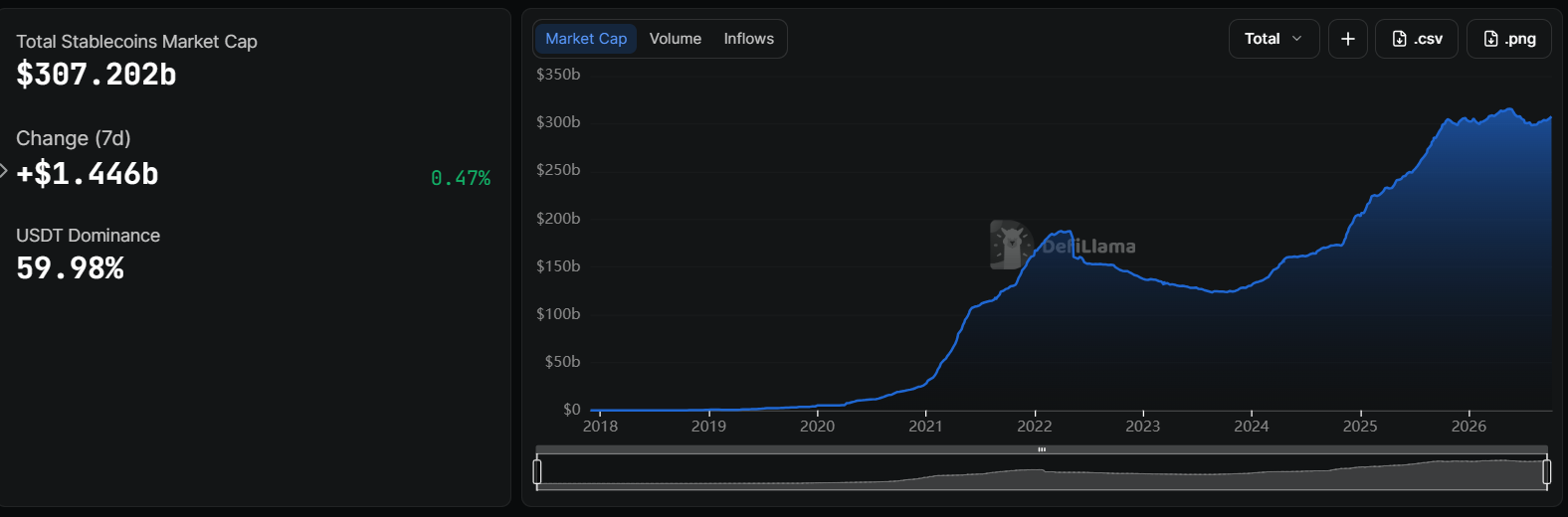
Chok did not name a source for the predictions he cited, which put supply at $3 trillion by 2030.
Citi’s September 2025 forecasts for 2030 range from a $1.9 trillion base case to a bull case of $4 trillion.