
Why Democrats’ Midterm Victory Could Force a Rewrite of the CLARITY Act
Points of Focus
- Democrats’ midterm victory gives them greater leverage to demand changes to the stalled CLARITY Act.
- Stronger investor protections, SEC oversight, stablecoin rewards, and DeFi regulation remain key sticking points.
- SEC and CFTC rulemaking continues, but lasting crypto regulations require congressional legislation.
US Democrats won both chambers in the Nov. 3 midterms, gaining leverage over any replacement for the stalled CLARITY Act.
The Senate rejected a motion to advance the CLARITY Act bill 49-50 on Sept. 15. No Democrats backed it, while four Republicans voted no. Even unanimous Republican support would have left the bill seven votes short of the required 60.
The arithmetic gives Democrats greater leverage to demand changes to the bill’s provisions on ethics, consumer protection, and regulatory jurisdiction. Those negotiations will also determine the extent of regulatory oversight facing crypto exchanges and decentralized finance (DeFi) developers.
https://twitter.com/scottmelker/status/2118393322087838114
Ethics safeguards and SEC authority return to negotiations
Seven Democratic senators said on July 22 that Republicans’ version of the CLARITY Act fell short on ethics, consumer protection, illicit finance, conflicts of interest, and market integrity. The Democratic framework, released Sept. 9, 2025, would prohibit elected officials and their families from issuing, endorsing, or profiting from digital assets. Senator Elizabeth Warren is reportedly set to chair Senate Banking, and Representative Maxine Waters is the likely House Financial Services chair.
According to journalist Eleanor Terrett, House Democrats are reportedly weighing a bill that gives the Securities and Exchange Commission (SEC) a larger supervisory role and the Commodity Futures Trading Commission (CFTC) a more limited one. Her Nov. 4 post cites three industry sources and describes proposals under discussion.
https://twitter.com/EleanorTerrett/status/2118041922011021418
The House-passed CLARITY Act instead requires digital commodity exchanges, brokers, and dealers to register with the CFTC. Giving the SEC greater authority would shift some oversight responsibilities away from the CFTC. This would also mark a departure from Senate Democrats’ 2025 framework, which proposed giving the CFTC exclusive jurisdiction over digital assets that are not securities.
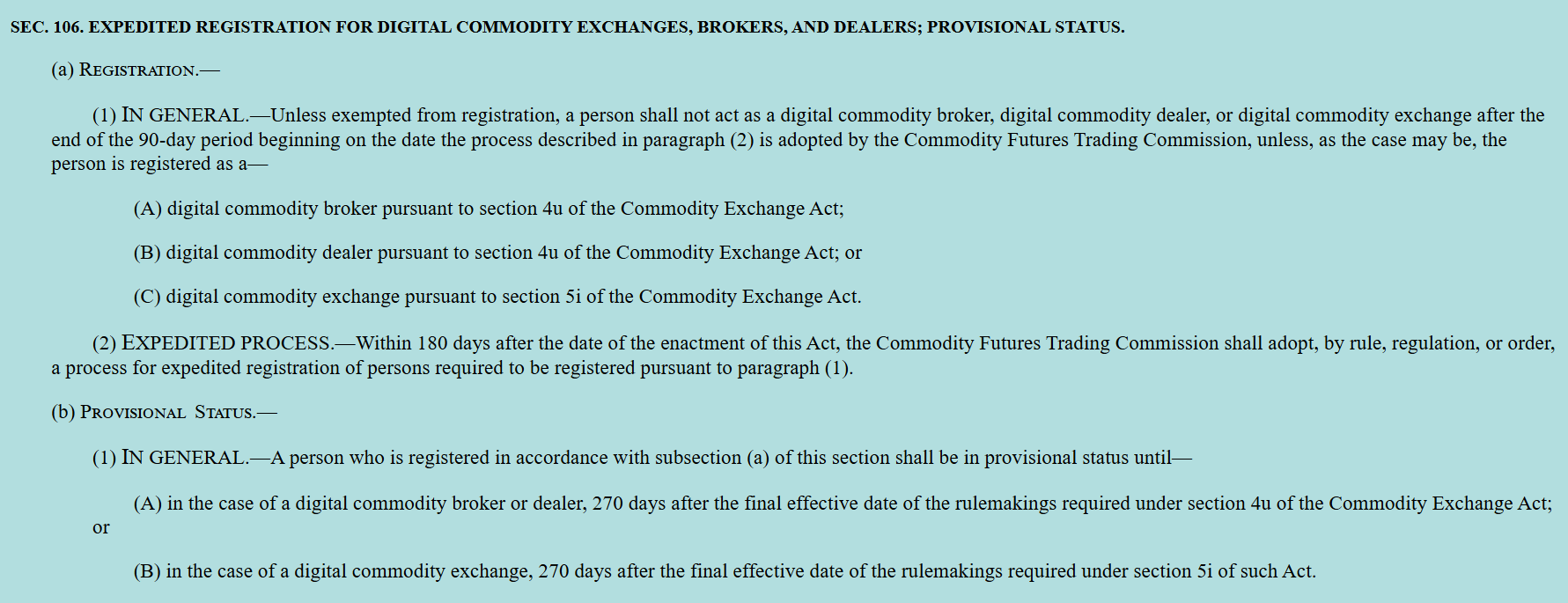
Terrett identified Waters’ 2025 amendment as a possible starting point for the new legislation. The amendment proposed SIPC-like insurance and monthly, auditor-attested proof-of-reserves. Those safeguards would extend negotiations beyond exchange registration to customer-loss protections and recurring reserve attestations.
Stablecoin rewards and DeFi oversight stay unresolved
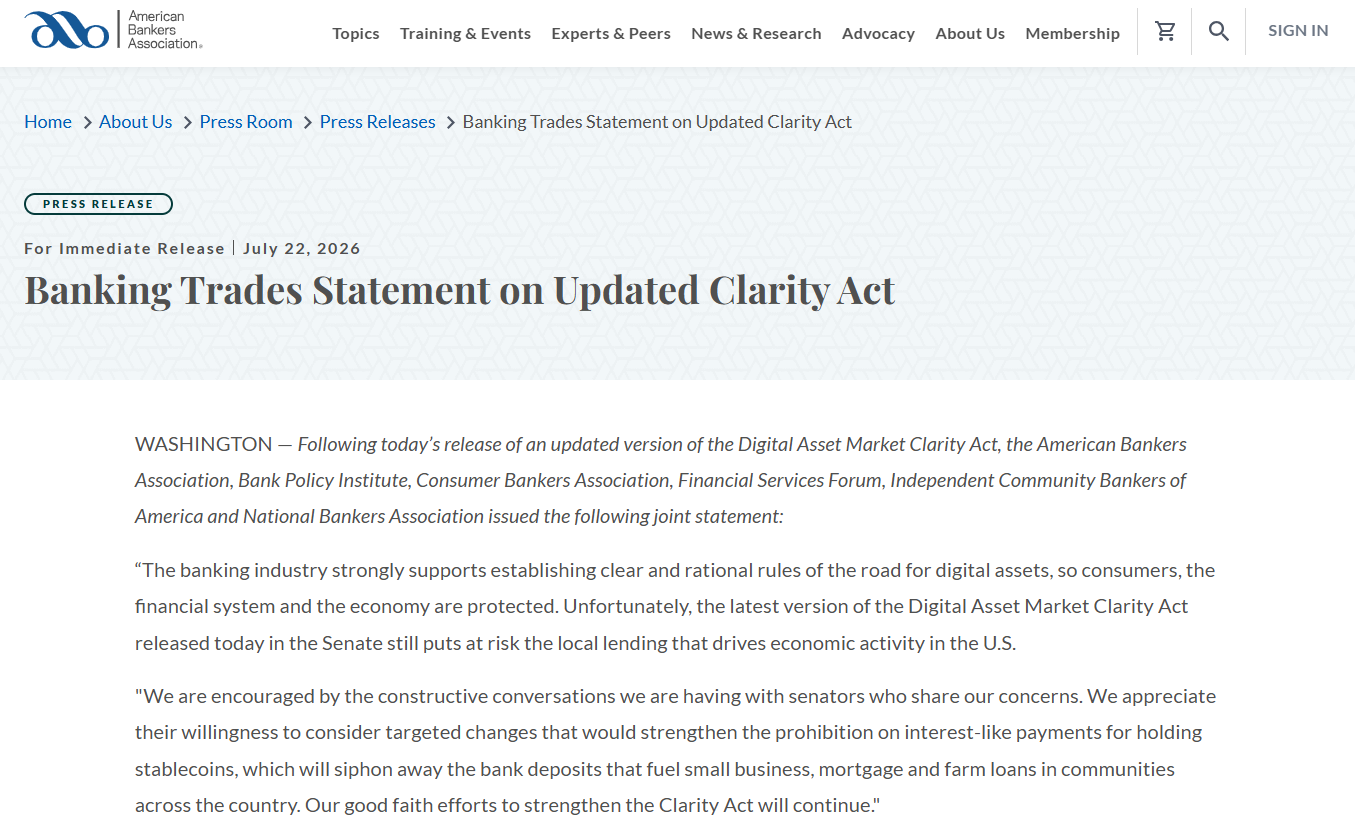
Six banking groups, including the American Bankers Association, urged a stronger ban on interest-like stablecoin returns on July 22, warning of deposit losses. Republican Senator Susan Collins voted against advancing CLARITY, questioning potential deposit outflows from community banks and credit unions. Manatt partner Mike Katz said yield-bearing crypto accounts and tokenized stocks could face slower launches or additional restrictions as Democrats gain influence.
The House-passed bill shields protocol development, validation, and node operation activities from Securities Exchange Act coverage while preserving SEC anti-fraud powers. The Senate Democrats’ 2025 framework instead calls for regulators to develop DeFi oversight.
The key disagreement is whether DeFi developers and node operators should face regulatory requirements similar to those imposed on centralized platforms, even when they do not control users’ funds.
Agency rules cannot replace a statute
The SEC proposed new rules named “Regulation Crypto Assets” on Aug. 18, and the CFTC initiated preliminary rulemaking on Oct. 5 under existing authority. The CFTC sought public input; the SEC’s proposal also remains unfinalized.
https://twitter.com/SECPaulSAtkins/status/2095234145626488912
On Aug. 18, SEC Chairman Paul Atkins warned that future regulators could overturn existing crypto rules unless Congress makes them law. His warning strengthens Democrats’ negotiating position, as Republicans need their votes to establish a lasting regulatory framework.
Duke University’s Lee Reiners reportedly called CLARITY dead but expects friendly SEC and CFTC regulators to keep approving more crypto products. Republican Senator Thom Tillis entered a motion to reconsider the Sept. 15 failed vote, although Reiners considers lame-duck passage unlikely. Unfinished bills expire when the 119th Congress ends on Jan. 3, 2027.