preferred on


Points of Focus
- Machi’s tracked account lost 99.85% of its peak value before receiving fresh funding.
- THEO plunged 92%, while MSCI’s new rules put Strategy and Metaplanet at risk.
- X402 passed 138 million transactions, and Aptos completed its original insider vesting cycle.
A near-total account drawdown did not stop Machi Big Brother from opening another large leveraged Ether (ETH) position. Meanwhile, unauthorized token minting forced Autheo to halt its network, and new MSCI rules created uncertainty for Bitcoin (BTC) treasury companies. The week also brought milestones in AI-powered payments and Aptos tokenomics.
Here are five crypto stories from Oct. 9 to Oct. 16 that may have slipped under the radar.
1. Machi loses 99.85%, then returns to a $14.9-million ETH long
A Hyperliquid account tracked as belonging to Jeffrey Huang, known as “Machi Big Brother,” collapsed from $12.65 million on Sept. 22 to just $19,269 on Oct. 15, a 99.85% drawdown.
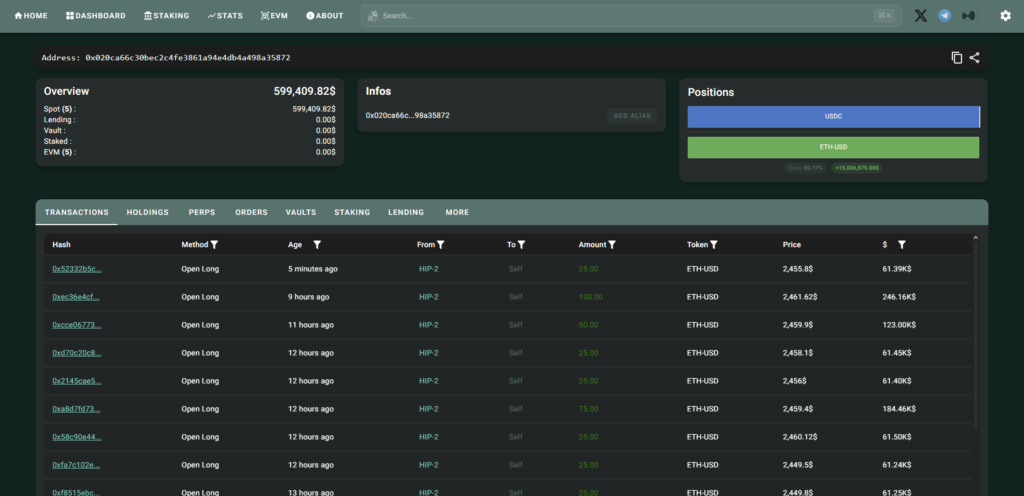
According to Hyperliquid’s explorer, the account subsequently received 250,000 USDC (USDC) in fresh funding. By 23:54 UTC on Oct. 15, tracking data showed a renewed 25x leveraged ETH long worth $14.9 million.
The losses coincided with broader Ether liquidations. The figures cover one tracked account, not Huang’s total assets.
2. THEO crashes 92% after unauthorized token mints
Autheo’s THEO token plunged 92% following suspicious minting and sales on Base.
Security monitor Defimon initially identified 19 million unbacked tokens and estimated $1.7 million in losses. A subsequent investigation by PublicAML tracked another 100-million-token mint and estimated $730,000 in proceeds from sales.
In an Oct. 13 statement, Autheo confirmed it had halted mainnet block production, taken validators offline, and stopped the affected cross-chain relayer. The full scope and financial impact of the incident remain unconfirmed.
We want to address the security incident affecting Autheo directly and transparently. On October 12, 2026, we became aware of an exploit involving the unauthorized minting of base:0xebe516a20238f79dc20b07ead6768e08891ed309 tokens by an unauthorized actor, followed by transfers…
— Autheo (@Autheo_Network) October 13, 2026
The incident raises further questions about infrastructure security amid crypto exploit losses.
3. AI payment protocol x402 passes 138 million transactions
Chainalysis reported on Oct. 14 that the x402 payment protocol had processed 138.5 million cumulative transactions on Base by the third quarter of 2026.
The protocol enables software, including AI agents, to pay for online services using cryptocurrency.
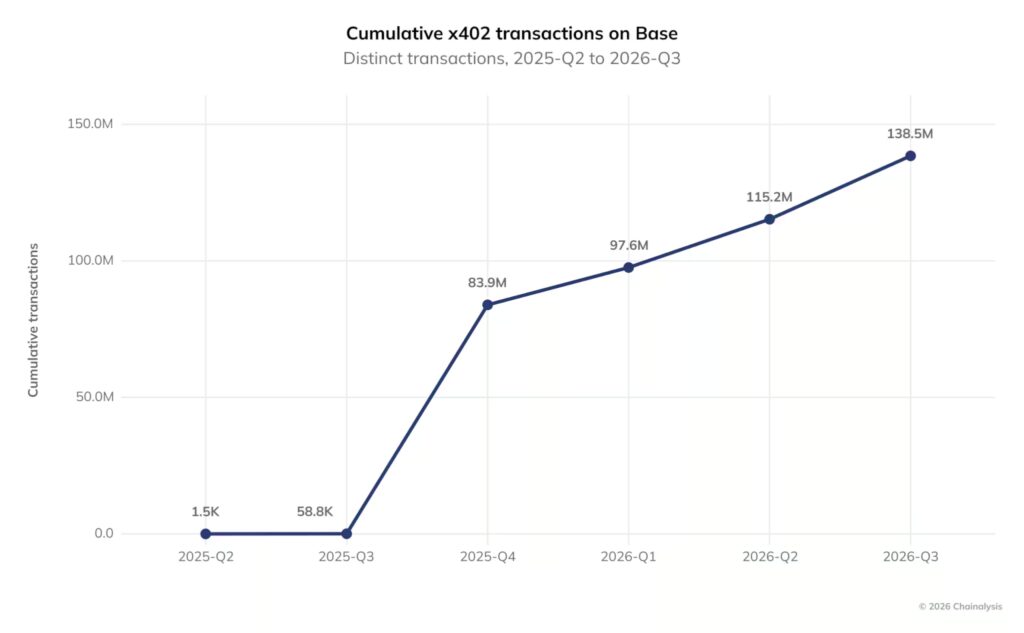
Extended data through September showed that over 87% of payments were worth between $0.0001 and $0.10.
The transaction count includes speculative activity and does not establish how many purchases were autonomous. Questions about AI payment accountability remain unresolved.
4. MSCI rules put Strategy and Metaplanet at risk
MSCI adopted new eligibility rules on Oct. 15 that could exclude qualifying non-operating companies from its Global Investable Market Indexes beginning Nov. 30.

An earlier simulation identified Bitcoin treasury companies Strategy and Metaplanet among potential deletions.
Companies face financial screening based on operating assets and other criteria, with existing constituents generally required to fail across two consecutive annual filing periods.
The final affected-company list is expected Nov. 11. The changes come as corporate crypto accumulation expands to Ether-focused treasuries.
5. Aptos completes four-year insider vesting
Oct. 12 marked the scheduled completion of Aptos’ original four-year vesting cycle for investors and core contributors.
The genesis unlock schedule for Aptos core contributors and investors concluded yesterday, October 12, 2026.
It ran for four years, exactly as published at mainnet launch. No core contributor or investor tokens from genesis are left to unlock.
Original schedule:… pic.twitter.com/PohieM5679
— Aptos (@Aptos) October 13, 2026
Those groups were allocated 324.78 million Aptos (APT) tokens at genesis, representing 32.48% of the initial supply, under a four-year schedule.
The Aptos Foundation estimated that completing the cycle would reduce annualized token unlocks by about 60%.
Community and foundation distributions continue under longer schedules, while staking rewards remain a separate source of issuance. The actual impact on selling pressure depends on holders’ decisions.