preferred on


Points of Focus
- Wrapped Bitcoin is 1.05% of the BTC supply, while Babylon’s Yu wants 10% used as collateral.
- Babylon’s Aave vaults remain on public testnet as the integration progresses toward mainnet launch.
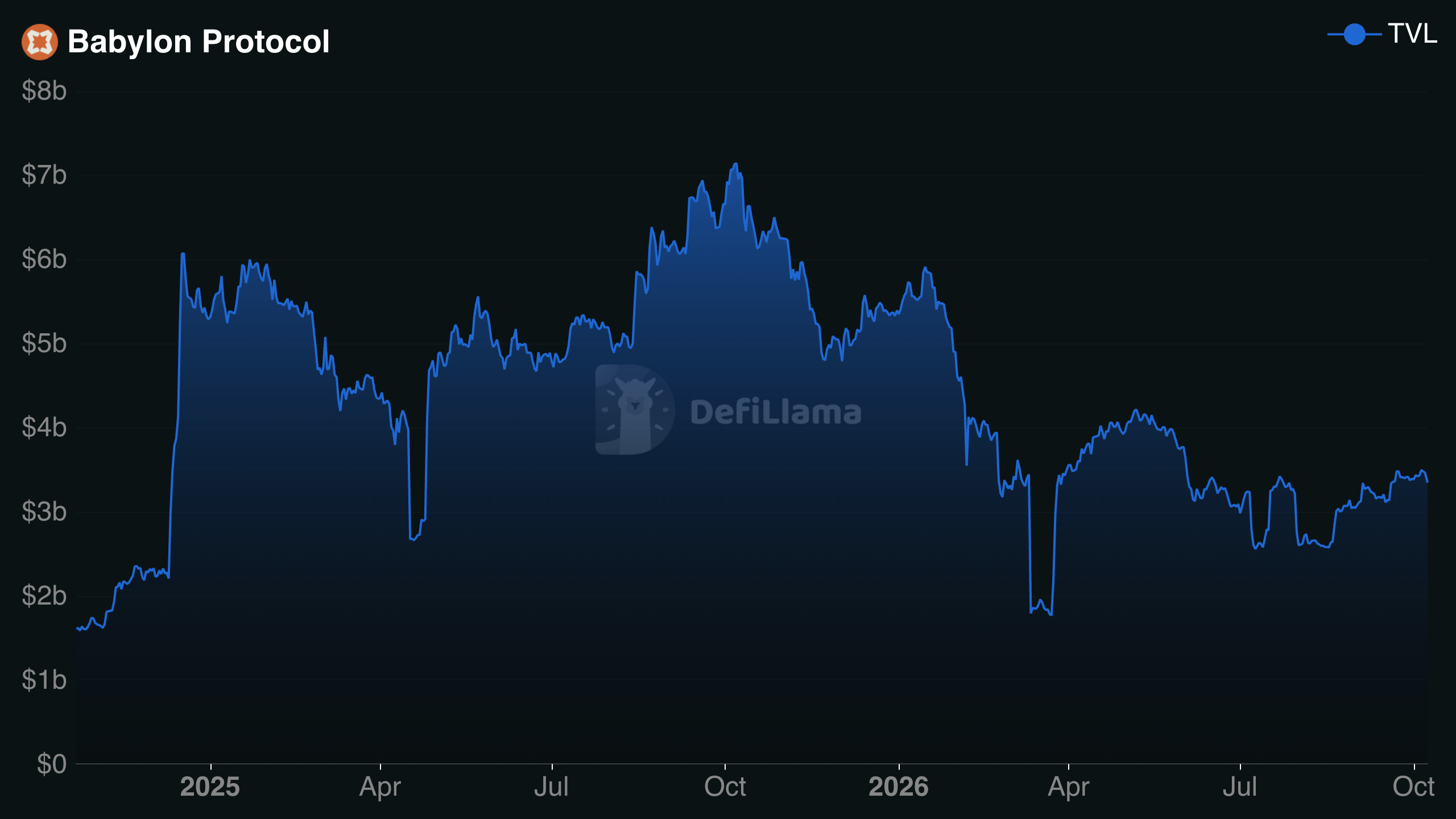
- Babylon’s Bitcoin staking TVL is down 34.4% in BTC from its Dec. 14, 2025, peak.
Bitcoin (BTC) is a $1.68-trillion asset that decentralized finance (DeFi) barely uses as collateral. CoinGecko lists 116,132 Wrapped Bitcoin (WBTC) in circulation and shows 94,782 Coinbase cbBTC, which is 1.05% of the 20.09 million BTC supply on Oct. 7. Circle has since joined the wrapped Bitcoin race with cirBTC.
Babylon tried to widen that use through staking. Its staking total value locked (TVL) stood at 40,538 BTC on Oct. 7, which DefiLlama data shows is 34.4% below the 61,771-BTC peak of Dec. 14, 2025. Lombard wrote on Aug. 13 that “Bitcoin staking as a market has failed to develop.”
Fisher Yu, co-founder of Babylon Labs, said the fix is a different product. In a conversation with AlphaWire’s Dr. Guneet Kaur during Token2049 Singapore, Yu said Babylon’s goal over the next three to five years is for Bitcoin to match gold as collateral, which he put at about 10%.
Next stop, we’ll be in Singapore for @token2049 🇸🇬
Connect with @baby_fisherman, @yijihoon5, @rngesus_95, and @jk_remote to talk native Bitcoin collateral, Trustless Bitcoin Vaults (TBV).
See you soon! pic.twitter.com/0Cz9pmC6Aj
— Babylon (@babylonlabs_io) October 1, 2026
Babylon Bitcoin staking and the move to Trustless Bitcoin Vaults
The shift was not a grand plan, Yu said. Babylon asked whether Bitcoin could be staked self-custodially, and then holders ask to borrow against staked coins.
“Then we realized that staking itself is not enough,” he said. “We need Bitcoin to do more things while it’s being locked.”
How Babylon vaults let holders borrow on Aave
Borrowing against Bitcoin means handing it over first, Yu said, whether to WBTC’s custodian, Coinbase, or a centralized lender. “The very first step is always to give it to someone else first,” he said.
Babylon’s docs describe a Trustless Bitcoin Vault (TBV) that locks BTC on the Bitcoin network and appears on Ethereum as an ERC-20 record that Aave v4 can treat as collateral. Borrowers can draw USDC (USDC), Tether’s USDt (USDT), or WBTC, and Babylon’s site lists variable rates of 3%-5%.
Yu’s use case is borrowing stablecoins on Aave to buy a tokenized S&P 500 or QQQ fund, which he said is not investment advice. Tokenized stocks already work as collateral on Euler. Kraken’s xStocks vaults pay up to 2% a year, below Babylon’s listed borrowing rates.
TBV security and what is still on testnet
Yu highlighted Babylon’s extensive security efforts, including independent security audits and formal verification. While no protocol can be guaranteed entirely free of vulnerabilities, Babylon continues to prioritize rigorous security reviews ahead of mainnet.
Babylon named Coinspect, Sherlock, Zellic, ABDK, and ZK Security as auditors on May 29, with Runtime Verification doing formal verification.
Yu clarifies that users do not have to rely on a third party’s discretion to access or recover their Bitcoin. Ultimately, users retain control over their Bitcoin, subject to the borrowing terms and liquidation conditions agreed upon when creating the vault. Yu named Galaxy, HashKey, and Bedrock among them. The docs also say shared adapter, spoke, oracle, and governance risks still apply.
Native Bitcoin-backed borrowing powered by Babylon TBV is currently available on Aave v4 public testnet. The integration is progressing toward mainnet, subject to security reviews, governance requirements, and launch readiness.
Bitcoin collateral share and the 10% target
Yu said only about 3% of Bitcoin is used as collateral against more than 10% for gold and more than 20% for Ether (ETH). CoinGecko prices Bitcoin at $83,379 on Oct. 7, which makes 10% of supply about 2.01 million BTC, or $167.6 billion, roughly 50 times Babylon’s staking TVL in BTC terms.
Aave holders backed the integration in a Snapshot temp check from June 4-7, with 299,743 votes for and none against. Aave Labs’ Sept. 1 update says the integration is undergoing a full security review before market activation. Babylon’s proposal says a follow-up ARFC with risk parameters and supply caps must come next.