preferred on


Points of Focus
- None of 15 institutions cut crypto allocations during the roughly 50% drawdown.
- Bitcoin remained the core holding, while ETH and SOL faced stricter exit conditions.
- Investors cited thesis failure, regulation and industry risk, not price drops, as exit triggers.
None of the 15 large institutions interviewed by Bitwise reduced crypto allocations as the market fell roughly 50% between October 2025 and April 2026, while several added exposure.
The asset manager’s first institutional crypto adoption report found that price declines alone weren’t a stated reason to exit. Respondents instead pointed to thesis failure, regulatory reversal or an industry-wide credibility crisis as potential selling triggers.
Institutions are generally reluctant to announce their crypto positions.
So we asked 15 of the world’s largest investment firms how they’re allocating to crypto today.
Introducing the first-ever Bitwise Institutional Crypto Adoption Report.https://t.co/LhY0Ek5rjG
— Bitwise (@Bitwise) September 23, 2026
Bitcoin remains core holding as allocations stay small
Every respondent with crypto exposure owned Bitcoin, which for nearly all was their first, largest and longest-held crypto position. Most treated BTC as a store of value and often paired it with gold as protection against fiat currency debasement.
Crypto allocations ranged from 0.5% to 13% of investable assets, with most between 1% and 2%. Exposure was spread across ETFs, direct holdings, venture investments and hedge funds. For most respondents, crypto remained a small part of the overall portfolio even through the drawdown.
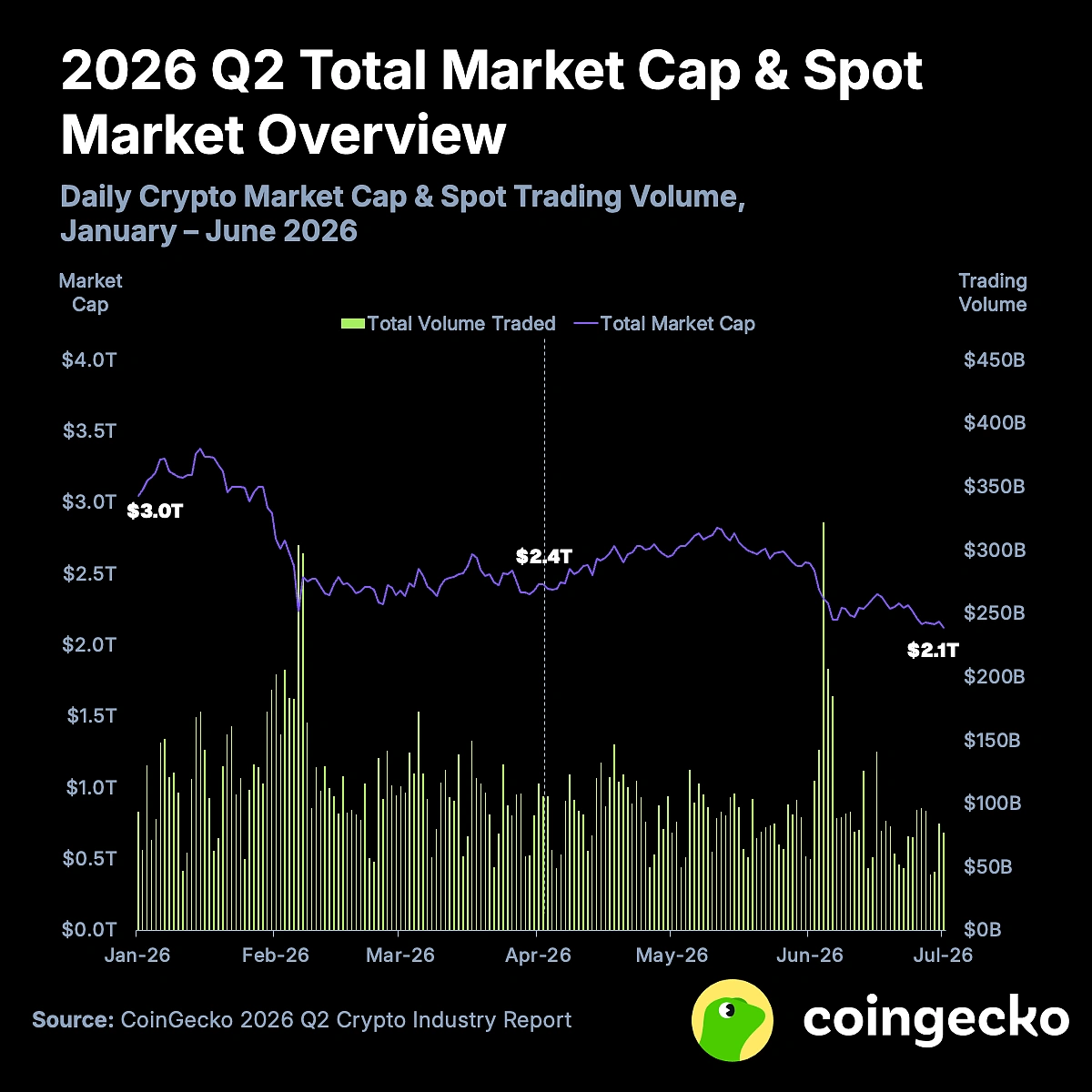
Independent CoinGecko data put total crypto market capitalization at $2.1 trillion at the end of Q2, roughly 52% below its October 2025 peak.
Ethereum and Solana face stricter exit tests
Conviction was less uniform beyond Bitcoin. Respondents holding Ethereum or Solana generally maintained smaller positions and shorter time horizons, with some prepared to exit if network adoption failed to translate into value for ETH or SOL.
They tracked stablecoins, DeFi, tokenization, transaction fees and other measures of network use. Almost every respondent also used spot crypto ETFs or planned to, citing lower costs, less operational work and easier portfolio administration.
Bitwise study covers small, anonymized sample
The findings have limits. Bitwise interviewed 15 senior investment professionals, and the respondents weren’t named. The sample covered endowments, foundations, public pensions, family offices, sovereign wealth funds, consultants and public companies, including some investors still researching crypto rather than already holding it.
Bitwise also manages about $9 billion in client assets across crypto products, so the study shouldn’t be read as representative of institutional investors as a whole. The report captures how 15 large allocators approached the 2025–2026 drawdown, not how every institutional portfolio behaved.