preferred on


Points of Focus
- AI agents on one crypto venue may see only a slice of pricing across 30+ exchanges and market makers.
- Judy Goh said the trading edge could shift from speed toward normalized data, liquidity, and automated risk controls.
- Kaiko tracks 100+ exchanges, while the FSB flags AI risks beyond market data quality.
AI trading systems that rely on a single crypto venue may be working with an incomplete market view because pricing is spread across more than 30 exchanges and market makers.
Integral argues that this fragmentation could make data quality as important as execution speed as AI takes a larger role in trading decisions.
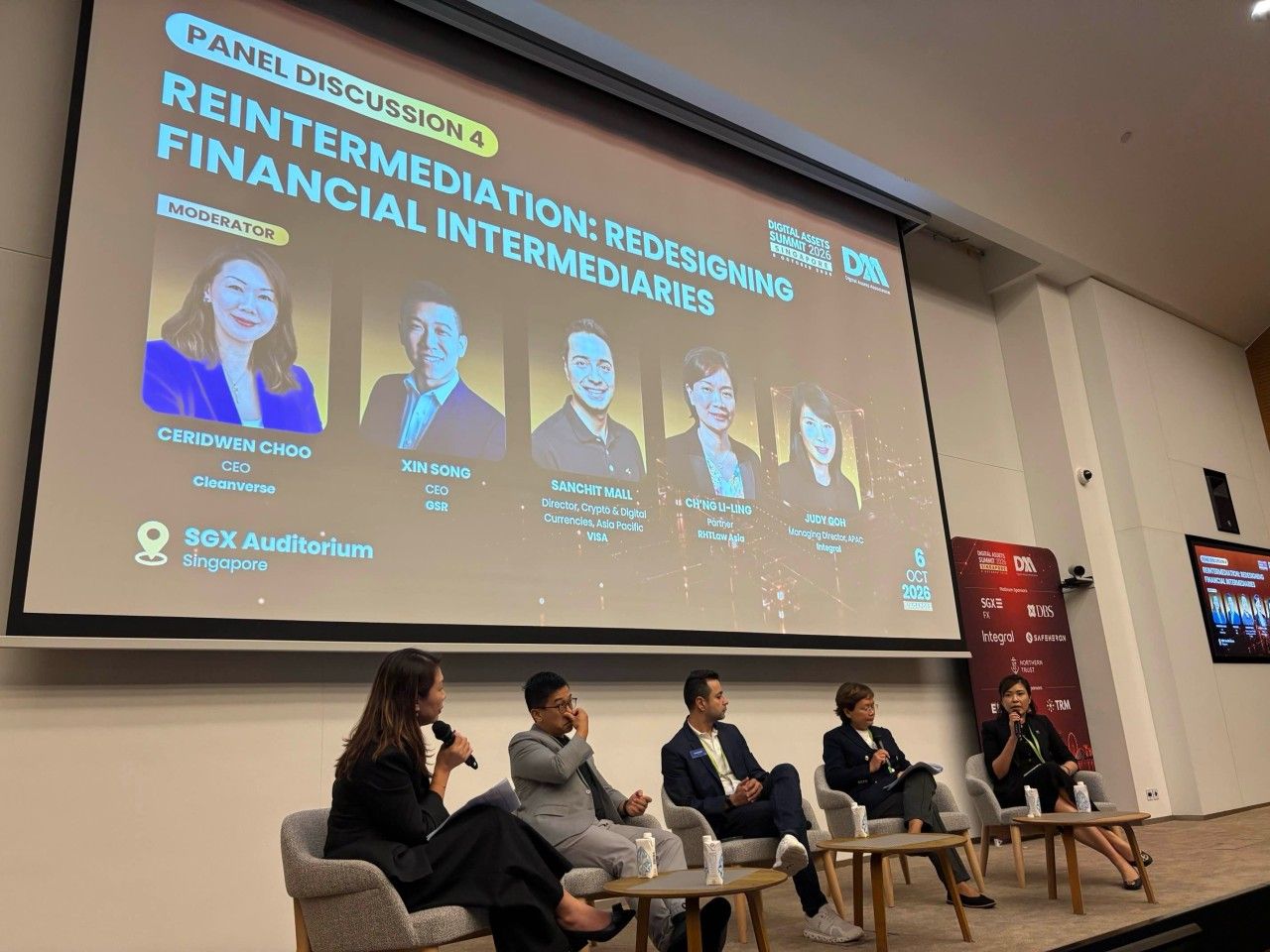
Judy Goh, managing director for APAC at Integral, told AlphaWire’s Muhammad Usman Hassan on Oct. 7 at Token2049 Singapore that crypto markets are increasingly adopting price aggregation, real-time execution, and risk controls developed in traditional FX.
Crypto fragmentation puts AI data quality in focus
“With an AI agent acting on a single venue, it isn’t seeing the market,” Goh said, adding, “It’s only seeing one slice of that fragmented picture.”
She said Integral aggregates prices from exchanges and market makers, filters outliers, and normalizes the feeds into a benchmark intended to give institutional clients a broader market view. Integral told AlphaWire that its digital trading system now connects to close to 50 crypto liquidity providers.
The fragmentation extends beyond Integral’s network. Kaiko’s Market Explorer covers more than 100 centralized and decentralized exchanges, while its Q3 2026 exchange ranking evaluates spot venues across data quality, liquidity, and technology, alongside governance, business, and security.
Crypto’s market structure makes the input problem more acute because the same asset can trade across independent order books with different depth and data quality. For an AI trading system, the input feed sets the market view available to the model before execution.
AI trading needs guardrails beyond better data
Goh said better data alone isn’t enough. She pointed to position limits, margin constraints, and kill switches as controls that can restrict automated strategies when conditions change or risk thresholds are reached.
She said Integral’s PrimeOne platform ties trading limits dynamically to the onchain margin balances held by counterparties, allowing the infrastructure to enforce those limits automatically.
The Financial Stability Board’s June 2026 consultation on AI in finance broadens the risk picture beyond pricing inputs. It identified third-party dependencies, market correlations, cyber and model risk, data quality, and governance as vulnerabilities that can increase financial stability risks.
The consultation proposed 12 sound practices covering AI governance, risks across the AI lifecycle, cyber and technology controls, and third-party dependencies.