preferred on


As the crypto and digital asset industry has matured, the call for improved crypto and digital asset regulations has been approached in unique ways from different economic regions.
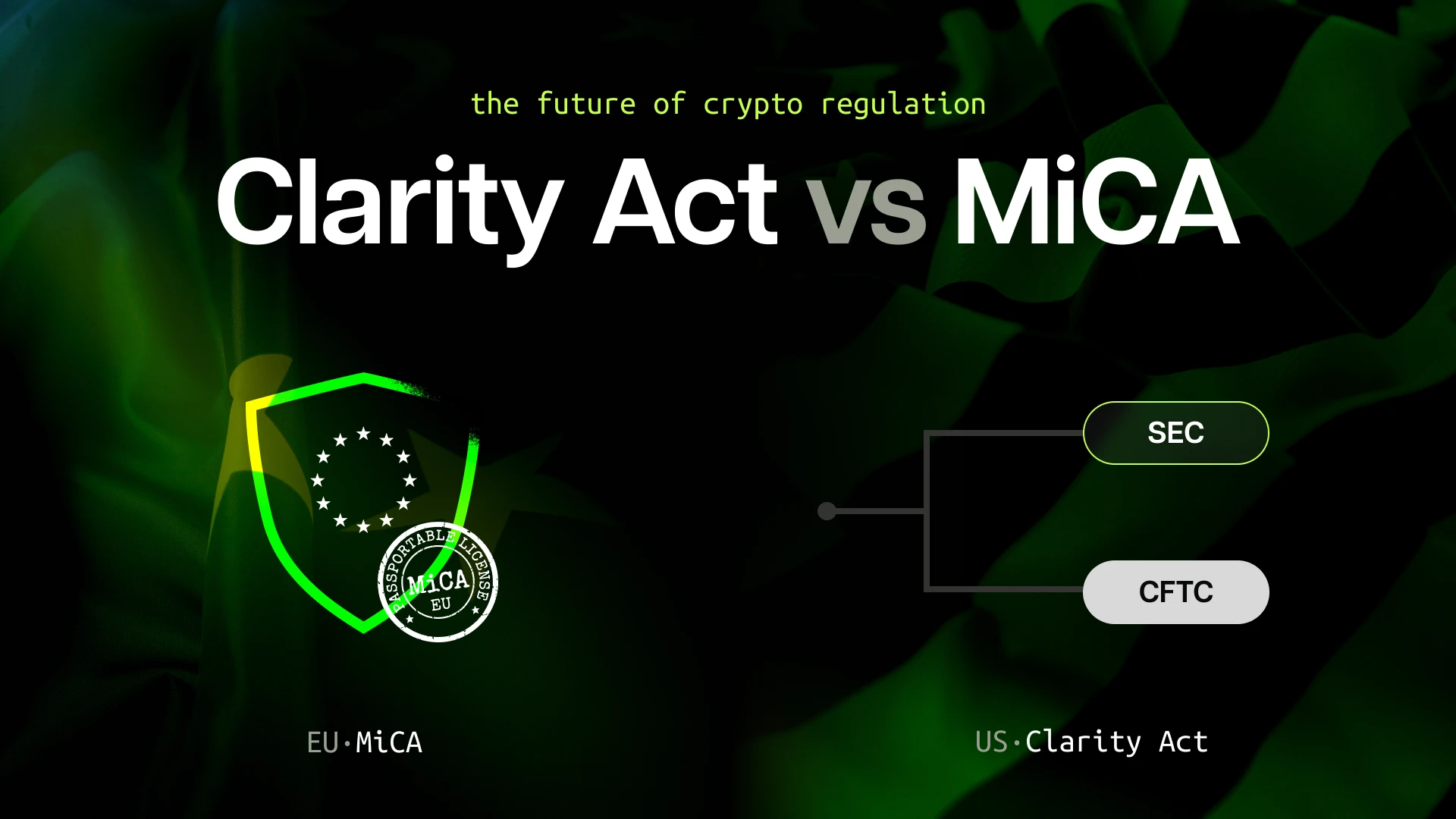
This regional divergence clearly separates the United States-focused Clarity Act from the European Markets in Crypto-Assets (MiCA) in not only structure but also in scope.
MiCA grants a single EU-wide license covering crypto-asset issuers and service providers, while the Clarity Act splits US oversight between the Securities and Exchange Commission (SEC) and the Commodity Futures Trading Commission (CFTC), creating a longer, multi-agency approval process for digital asset projects and compliance teams navigating both markets.
As MiCA has been in effect at differing levels for the past few years, European industry leaders are now discussing what additional improvements can be made to the current legislation.
Questions have risen about the initial decentralized oversight by national regulators across member states, paired with European Securities and Markets Authority (ESMA) coordination, and whether this should move to a more split system, where some regulators are advocating for centralized supervision to prevent regulatory arbitrage and fragmented enforcement.
Key Takeaways
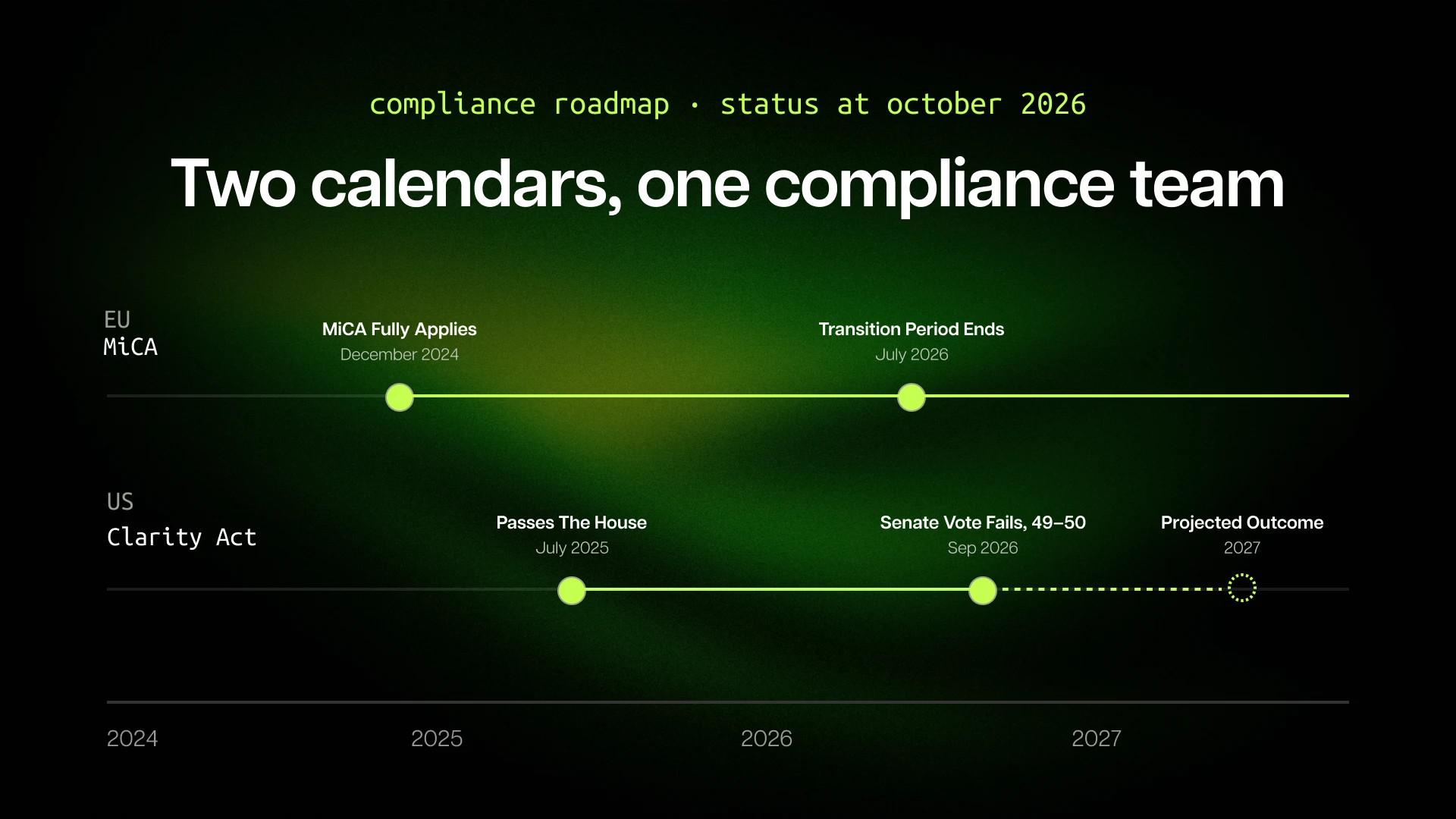
The EU implemented MiCA as a comprehensive regulatory framework in December 2024.
The US Clarity Act passed the House in July 2025 (294-134) but failed a Senate procedural vote on Sept. 15, 2026, so comprehensive US market structure law is unlikely before 2027.
MiCA establishes a single license requirement across EU member states for crypto-asset service providers.
The Clarity Act represents the US legislative response to crypto regulation, reflecting different philosophical approaches than Europe’s framework.
Two regulatory systems reveal fundamental differences in how major crypto markets approach asset oversight and compliance.
What does the Clarity Act actually regulate?
The Clarity Act would divide US oversight of digital assets between two federal agencies: the SEC and the CFTC.
After years of jurisdictional ambiguity, founders and compliance managers have been left guessing which regulator governs any given token. This bill replaces that guesswork with a formal market-structure framework.
This clear division of roles is important, as crypto regulation in the US has long operated without much-needed clarity.
Projects have faced enforcement actions years after launch, with little warning about which agency held authority. A defined framework changes that for anyone building or investing in digital assets.
Which agency oversees which crypto assets in the US?
The SEC retains jurisdiction over assets that function like securities, according to the Howey test definition, while the CFTC gains expanded authority over commodities-style digital assets.
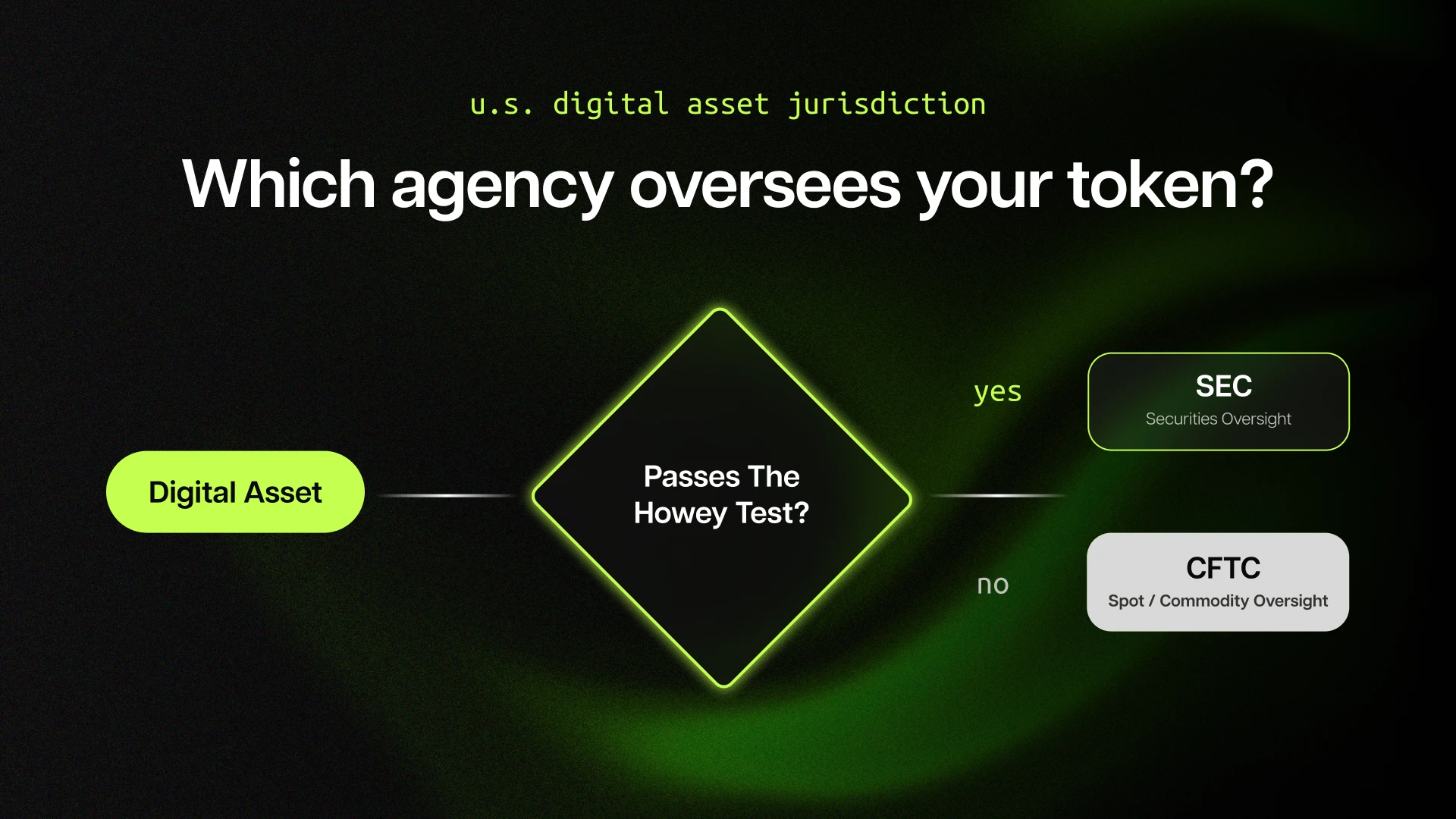
This division does not eliminate every gray area, but it narrows the field considerably.
Compliance teams gain a clear starting point rather than playing a guessing game, which they may run into future trouble with.
Why does the SEC-CFTC split matter for investors?
This clearer jurisdiction would reduce the risk of sudden regulatory surprises that have caused token prices to fluctuate greatly in past cycles.
It would also enable more certainty for founders and teams to be able to incorporate compliance expenses into products.
Founders could therefore structure token launches with a defined agency in mind instead of guessing which regulator might intervene later.
How does the European MiCA differ from the US Clarity Act?
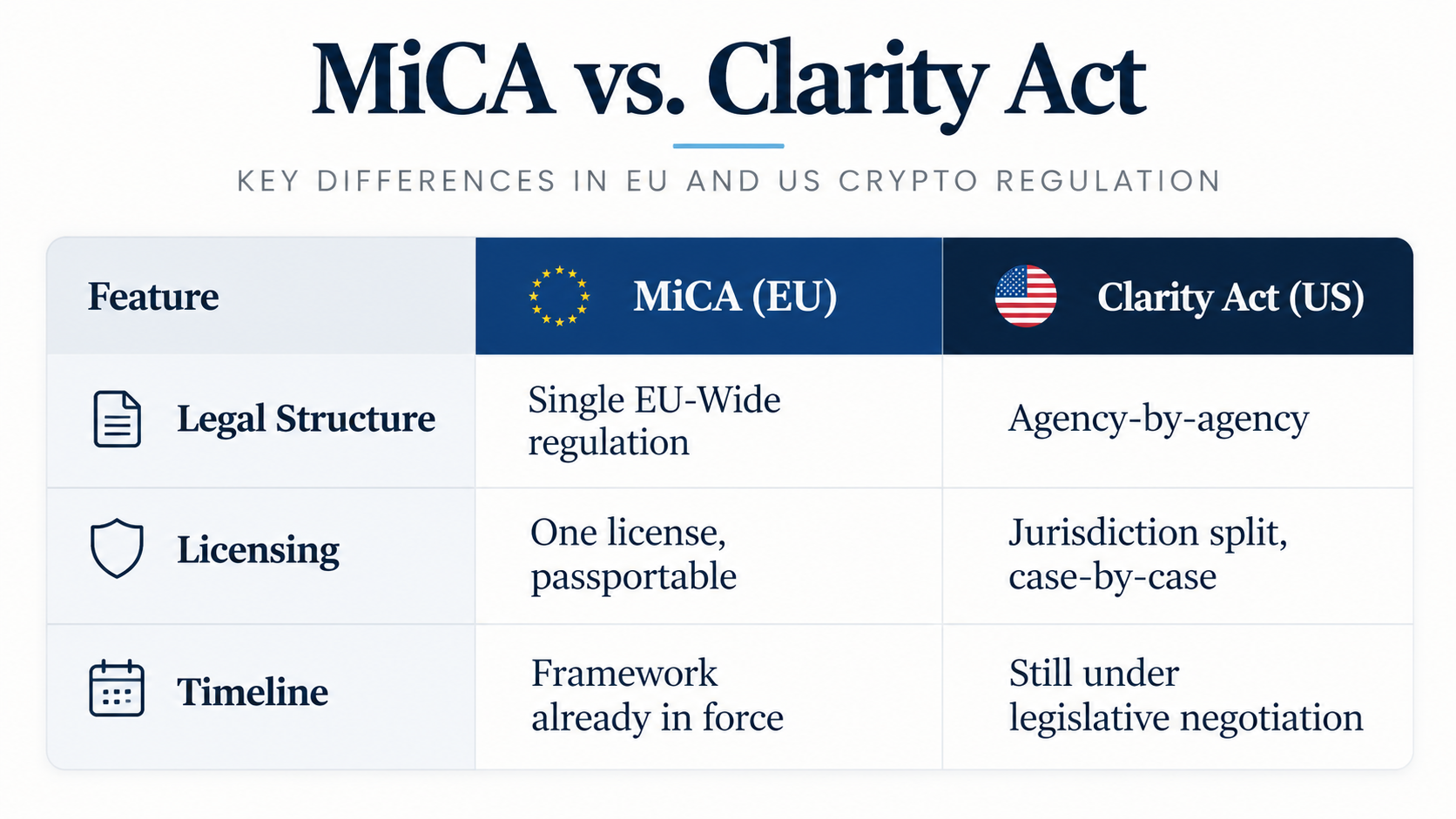
Europe built one rulebook and put it into action, whereas the US is still assembling several.
Crypto and digital asset regulation in the European Union runs through Regulation (EU) 2023/1114, known as MiCA, which stands as the first comprehensive framework standardizing crypto-asset business across the entire European Economic Area.
There is now talk within the European digital asset community about MiCA 2.0 and implementing improvements to the current legislation, as there are issues within each different country.
While this is being pushed forward by a number of European countries, research has deemed this move as “legally questionable, structurally incoherent, and operationally harmful.”
The US path, debated through proposals like the Clarity Act, splits oversight across multiple agencies rather than consolidating it under one license.
While a single EU authorization lets a project passport its services into 27 member states without separate national approvals, the individual national regulations still need to be taken into consideration.
No equivalent shortcut exists stateside, where a founder may need to satisfy federal securities rules, commodities rules, and state-level requirements simultaneously.
Why has the US taken longer to regulate crypto and digital assets?
Divided jurisdiction, the late 2025 government shutdowns, and a drawn-out fight over ethics rules for officials holding crypto slowed the bill through 2026. The failed cloture vote on Sept. 15 pushed it past the midterms, and the industry is now looking for SEC and CFTC rulemaking for interim clarity.
Does this divergence affect investors directly?
Yes, and the effect compounds over time.
Founders building for global users face multiple compliance calendars instead of one, which contributes to growing costs and extends timelines.
Investors weighing exposure must track outcomes on both sides of the Atlantic.
Does this split jurisdiction create compliance risk?
An additional complication that this divided regulatory authority adds is that it forces compliance teams to satisfy two rulebooks instead of one.
The bill sets statutory rules for digital-asset classification, trading platforms, and intermediaries. It splits oversight rather than consolidating it under a single agency, and that structure changes how legal, product, and operations teams build their compliance programs from day one.
Once the bill passes, compliance teams may face an entirely new rulebook governing how tokens get classified and how platforms register.
Crypto and digital asset regulation under this framework means different obligations depending on which side of the jurisdictional line a product falls. A token treated one way by one regulator could face different disclosure or registration standards elsewhere in the same transaction chain.
What should crypto and digital asset compliance managers plan for?
Classification is the starting point, as compliance managers should map which digital assets and platform activities fall under each regulator’s authority before building internal controls.
Digital-asset classification standards and how they apply to existing token listings
Registration requirements for trading platforms and intermediaries
Reporting lines that differ depending on jurisdictional split.
What should crypto builders and investors be tracking?
With the Clarity Act stalled, the preparation time remains open.
This window lets crypto and Web3 founders and compliance managers align internal policies before enforcement lines get drawn and enables them to put plans into place for the different outcomes of the act.
Founders can map which parts of their token structure, custody setup, or trading operations would fall under securities oversight versus commodities oversight, then adjust before the rules lock in.
Compliance managers benefit from treating the current period as a stress test and are able to plan for developments so they don’t become costly future surprises.
The future of crypto regulation: What the Clarity Act and MiCA mean going forward
Crypto regulation in the US and the EU is moving toward the same goal by two very different routes, with MiCA already providing a single rulebook and passportable license across the EU, while the Clarity Act aims to give the US a defined market structure by dividing oversight between the SEC and the CFTC.
Neither framework is finished, as the EU is already debating how MiCA could evolve, and the US is still working out whether, and in what final form, the Clarity Act will become law.
For founders and compliance teams, the most durable approach is to design for both systems at once by classifying each asset and activity early, documenting the reasoning behind those decisions, and building controls that can adapt to either model because teams that treat crypto regulation as an ongoing part of product design will be in a far stronger position whichever way the rules settle.
Frequently asked questions about crypto regulation
What is crypto regulation?
Crypto regulation is the set of laws, rules, and supervisory practices that govern how digital assets are issued, traded, held, and transferred. It usually covers the licensing of service providers, consumer protection, stablecoin reserves, market integrity, and Anti-Money Laundering controls, and it varies considerably from one jurisdiction to another.
What is the main difference between MiCA and the Clarity Act?
MiCA is a single EU-wide regulation that provides one license that can be passported across all 27 member states, while the Clarity Act is a US bill that divides oversight of digital assets between the SEC and the CFTC depending on how each asset is classified.
Has the Clarity Act become law?
At the time of writing in September 2026, the Clarity Act had passed the House of Representatives but had not completed its passage through the Senate. Readers should check Congress.gov for the latest status, as the bill’s progress and final wording may have changed since publication.
Does MiCA apply to crypto companies based outside the EU?
MiCA applies to companies that provide crypto asset services to customers in the EU, so a company based elsewhere generally needs authorization through an EU member state before it can actively serve EU clients. There is a narrow exception for services a client requests entirely on their own initiative, but regulators interpret it strictly, and it should not be relied on as a business model.
Sources
- Hill,, R. (2025). Text – H.R.3633 – 119th Congress (2025-2026): Digital Asset Market Clarity Act of 2025. Congress.Gov. https://www.congress.gov/bill/119th-congress/house-bill/3633/text
- ESMA. (2023). Markets in Crypto-Assets Regulation (MiCA). Www.Esma.Europa.Eu. https://www.esma.europa.eu/esmas-activities/digital-finance-and-innovation/markets-crypto-assets-regulation-mica
- Howey test. (2024). LII / Legal Information Institute. https://www.law.cornell.edu/wex/howey_test
- Buttigieg, C. P., & Gauci, I. (2026). MiCA and the flawed premise of centralised supervision: operational burden vs. supervisory consistency. ERA Forum, 27(1), 49–58. https://doi.org/10.1007/s12027-026-00872-0
- Miroslav Đurić, LL.M. (2026, May 27). MiCA 2.0: The EU Commission launches consultation on the next chapter of EU crypto regulation. Taylorwessing.Com; Taylor Wessing.